Black Phoebe (Sayornis nigricans) is in the Tyrant Flycatchers family (Tyrannidae). Across the U.S., iNaturalist users have logged 81,352 research-grade observations of it in our sample, peaking in April.
Seasonal pattern in the national data: year-round resident. Counts also reflect when people are out photographing, so compare months within a state rather than across states.
When to photograph Black Phoebe: observations by month (U.S.)
About Black Phoebe
The black phoebe (Sayornis nigricans) is a passerine bird in the tyrant-flycatcher family. It breeds from southwest Oregon and California south through Central and South America. It occurs year-round throughout most of its range and migrates less than the other birds in its genus, though its northern populations are partially migratory. Six subspecies are commonly recognized, although two are occasionally combined as a separate species, the white-winged phoebe.From Wikipedia via iNaturalist — article, CC BY-SA.
Black Phoebe by state
| State | Observations | Peak month | Main season |
|---|---|---|---|
| California | 72,126 | April | Mar–Feb |
| Arizona | 3,585 | January | Dec–Nov |
| Oregon | 1,738 | October | Sep–Aug |
| Texas | 1,273 | January | Sep–May |
| New Mexico | 1,035 | April | Mar–Jul |
| Nevada | 914 | September | Aug–Jul |
| Washington | 304 | January | Jul–May |
| Utah | 214 | April | Mar–Aug |
| Colorado | 141 | April | Mar–Jun |
| Minnesota | 10 | October | Oct–Nov |
| Oklahoma | 5 | March | Mar–Mar |
Main season = months with at least 30% of the state's peak-month count.
Related birds (Tyrant Flycatchers)

Eastern Phoebe
Eastern Kingbird
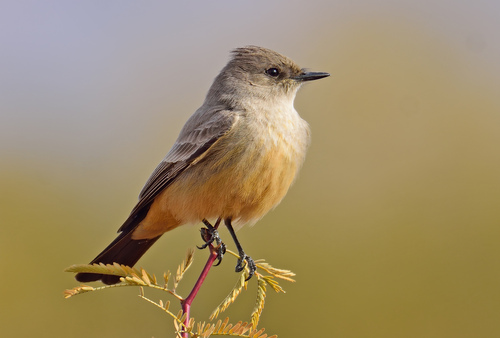
Say's Phoebe
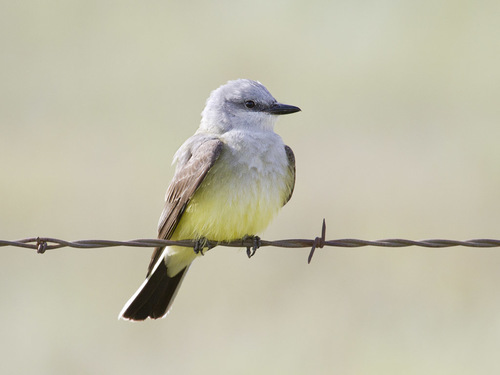
Western Kingbird
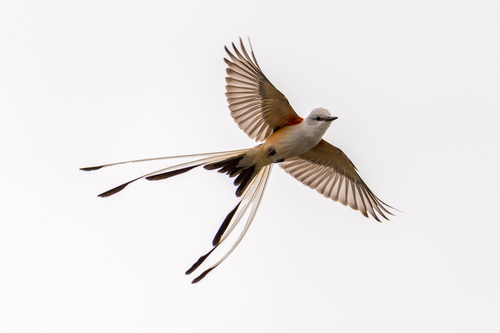
Scissor-tailed Flycatcher

Vermilion Flycatcher
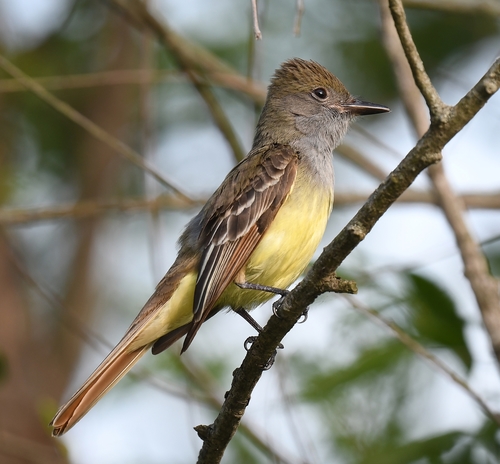
Great Crested Flycatcher
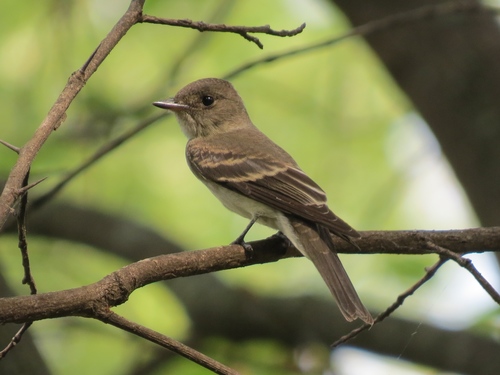
Eastern Wood-Pewee
Photography tips
- Use a fast shutter (1/2000 s or faster) for birds in flight.
- Focus on the eye and shoot at the bird's eye level.
- Approach slowly and stop if the bird changes behavior; never bait or flush birds.
- Morning activity peaks in the first two hours after sunrise.
FAQ
When is the best time to photograph Black Phoebe?
Nationally, April has the most observations, with the main season from March to February.
Where is Black Phoebe most often seen?
The most observations come from California, Arizona, Oregon.