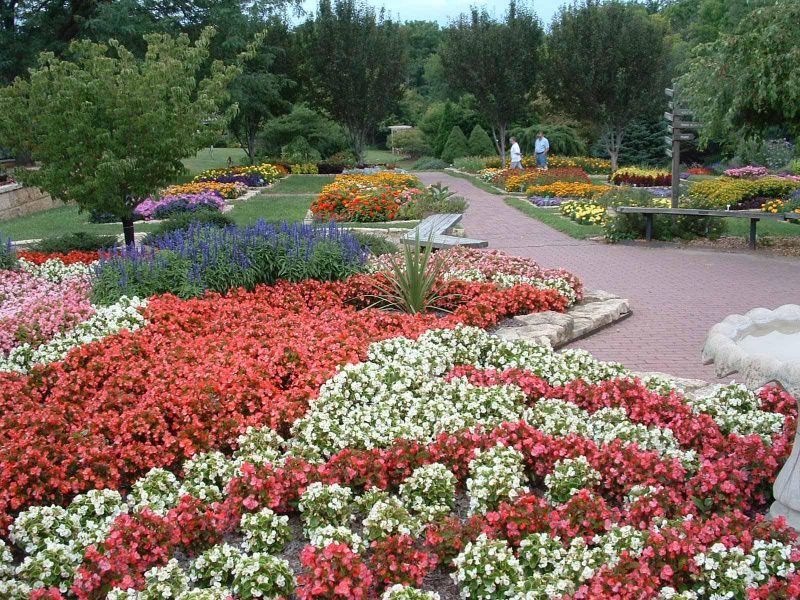
Dubuque Arboretum and Botanical Gardens — a botanical garden in Dubuque County, Iowa at about 225 m (738 ft) above sea level — is a classic subject for landscape photographers. It sits roughly 3.4 km (2.1 mi) NE of Asbury.
The Dubuque Arboretum and Botanical Gardens, or Marshall Park, is a 56 acres (230,000 m2) arboretum and botanical gardens established in 1980. The park's address is 3800 Arboretum Drive, Dubuque, Iowa. It is open, without charge, daily from dawn to dusk throughout the year. Among the attractions are Japanese and English gardens, various flower gardens and trees, a veterans memorial and a visitor center.From the Wikipedia article “Dubuque Arboretum and Botanical Gardens”, licensed under CC BY-SA 4.0.
Sunrise & sunset directions
At Dubuque Arboretum and Botanical Gardens the sunrise point swings a long way through the year: about 57° (ENE) at the June solstice and 122° (ESE) in late December. Sunset moves from 304° (WNW) in June to 238° (WSW) in December, and the midday sun climbs to 71° in summer but only 24° in winter.
| Date | Sunrise | Azimuth | Sunset | Azimuth | Noon sun | Daylight |
|---|---|---|---|---|---|---|
| March equinox (Mar 20) | 7:07 AM | 90° E | 7:15 PM | 271° W | 47° | 12h 08m |
| June solstice (Jun 21) | 5:26 AM | 57° ENE | 8:45 PM | 304° WNW | 71° | 15h 18m |
| September equinox (Sep 22) | 6:51 AM | 89° E | 7:02 PM | 271° W | 48° | 12h 11m |
| December solstice (Dec 21) | 7:30 AM | 122° ESE | 4:33 PM | 238° WSW | 24° | 9h 03m |
Azimuth is measured clockwise from true north (90° = east, 270° = west). Computed for 2026; values change by less than a degree from year to year.
Golden hour & blue hour by month
Gardens are best on bright overcast days or early mornings when dew is fresh and the wind is calm.
| Month (15th) | Blue hour starts | Sunrise | Golden hour ends | Golden hour starts | Sunset | Blue hour ends | Daylight |
|---|---|---|---|---|---|---|---|
| January | 6:59 AM | 7:31 AM | 8:14 AM | 4:11 PM | 4:55 PM | 5:26 PM | 9h 24m |
| February | 6:32 AM | 7:01 AM | 7:40 AM | 4:56 PM | 5:35 PM | 6:04 PM | 10h 34m |
| March | 6:48 AM | 7:16 AM | 7:53 AM | 6:32 PM | 7:09 PM | 7:38 PM | 11h 54m |
| April | 5:53 AM | 6:22 AM | 7:00 AM | 7:07 PM | 7:45 PM | 8:14 PM | 13h 22m |
| May | 5:10 AM | 5:42 AM | 6:22 AM | 7:38 PM | 8:18 PM | 8:51 PM | 14h 36m |
| June | 4:51 AM | 5:26 AM | 6:08 AM | 8:00 PM | 8:43 PM | 9:18 PM | 15h 17m |
| July | 5:06 AM | 5:39 AM | 6:21 AM | 7:58 PM | 8:39 PM | 9:13 PM | 15h 00m |
| August | 5:40 AM | 6:11 AM | 6:49 AM | 7:27 PM | 8:06 PM | 8:36 PM | 13h 56m |
| September | 6:15 AM | 6:44 AM | 7:21 AM | 6:37 PM | 7:15 PM | 7:43 PM | 12h 31m |
| October | 6:48 AM | 7:16 AM | 7:55 AM | 5:44 PM | 6:22 PM | 6:51 PM | 11h 06m |
| November | 6:25 AM | 6:55 AM | 7:37 AM | 4:00 PM | 4:42 PM | 5:12 PM | 9h 47m |
| December | 6:54 AM | 7:27 AM | 8:12 AM | 3:46 PM | 4:31 PM | 5:03 PM | 9h 05m |
Local time (America/Chicago), including daylight saving time. Golden hour runs from about −4° to +6° solar altitude, so the morning golden hour begins during blue hour, before sunrise.
Milky Way & night sky
From Dubuque Arboretum and Botanical Gardens, the Milky Way core is visible in a dark sky from March through September. June gives the longest window (about 4.2 hours on a moonless night), and the core peaks around 19° above the southern horizon. Our light-pollution model puts the sky at about Bortle 5 (suburban sky), so expect visible sky glow; drive away from towns for better results.
| Month | Core visible (15th) | Hours | Max altitude | Direction |
|---|---|---|---|---|
| January | Below 10° in darkness | — | -3° | — |
| February | Below 10° in darkness | — | 9° | — |
| March | 4:44 AM – 5:34 AM | 0.8 | 15° | SSE → SSE |
| April | 2:36 AM – 4:36 AM | 2.0 | 18° | SE → S |
| May | 12:47 AM – 3:37 AM | 2.8 | 19° | SSE → S |
| June | 10:58 PM – 3:08 AM | 4.2 | 19° | SSE → SSW |
| July | 10:47 PM – 1:47 AM | 3.0 | 19° | S → SSW |
| August | 9:54 PM – 11:44 PM | 1.8 | 18° | S → SSW |
| September | 8:51 PM – 9:41 PM | 0.8 | 15° | SSW → SSW |
| October | Below 10° in darkness | — | 9° | — |
| November | Below 10° in darkness | — | -2° | — |
| December | Below 10° in darkness | — | -19° | — |
Window when the galactic core is at least 10° high during astronomical darkness on the 15th of each month. Pick nights within a few days of the new moon. Plan exact nights with the Milky Way planner.
Estimated sky darkness: 5 Bortle 5 — Suburban sky. The Milky Way is weak near the horizon and washed out overhead; long exposures pick up a sky glow. Modeled zenith brightness ≈ 19.52 mag/arcsec². Aurora needs roughly Kp 5.5+ to show low on the northern horizon here.
Weather & best season
Long-term NASA satellite data for this area show September as the clearest month (about 46% average cloud cover) and December as the cloudiest (71%). July is the warmest month and January the coldest, which matters for gear, snow access and how long batteries last at night.
Average cloud cover (%)
| Jan | Feb | Mar | Apr | May | Jun | Jul | Aug | Sep | Oct | Nov | Dec | |
|---|---|---|---|---|---|---|---|---|---|---|---|---|
| High °F | 50 | 68 | 77 | 82 | 91 | 99 | 106 | 100 | 97 | 86 | 72 | 67 |
| Low °F | -35 | -19 | -17 | 11 | 27 | 39 | 46 | 44 | 33 | 22 | 2 | -21 |
| Precip. (in) | 1.2 | 1.6 | 2.2 | 3.8 | 4.2 | 5.5 | 4.3 | 3.9 | 3.8 | 3.0 | 2.2 | 1.9 |
Monthly climatology for the surrounding 1° grid cell from NASA POWER (MERRA-2). Mountain sites can be colder and cloudier than the cell average.
Photography tips for this botanical garden
- Kaleidoscopic and abstract images are great for flower close-ups — try the online kaleidoscope tool.
- A macro lens or close-up filter opens a world of detail — try a shallow aperture against a soft background.
- Many gardens restrict tripods or charge for photography; check the rules before you go.
- Backlit petals glow; position yourself so the sun is behind the flower.
- Seasonal exhibits (orchids, tulips, cherry blossoms) draw crowds — arrive at opening.
- Shoot RAW to keep the most latitude for high-contrast sunrise and sunset scenes.
Season: Spring bulbs and blossoms, summer perennials and autumn color; glasshouses offer winter subjects.
Suggested gear: Macro lens, Diffuser, Small reflector. Work out exposures with the depth of field, ND filter and NPF rule calculators.
Nearby photo spots
Other locations within 25 km of Dubuque Arboretum and Botanical Gardens, closest first.

Campgrounds nearby (Recreation.gov)
FAQ
When is the best time to photograph Dubuque Arboretum and Botanical Gardens?
What time is golden hour at Dubuque Arboretum and Botanical Gardens?
Where does the sun rise and set at Dubuque Arboretum and Botanical Gardens?
Can you see the Milky Way from Dubuque Arboretum and Botanical Gardens?
Do you need a permit to photograph at Dubuque Arboretum and Botanical Gardens?
How far is Dubuque Arboretum and Botanical Gardens from Asbury?
Sources
Location data: Wikidata, USGS GNIS / GeoNames, Wikipedia. Sun, moon and Milky Way times are computed by LWPhoto Atlas for 2026. Climate: NASA POWER. Sky darkness is a population-based estimate (Walker's law), not a measurement. See data sources & licenses.