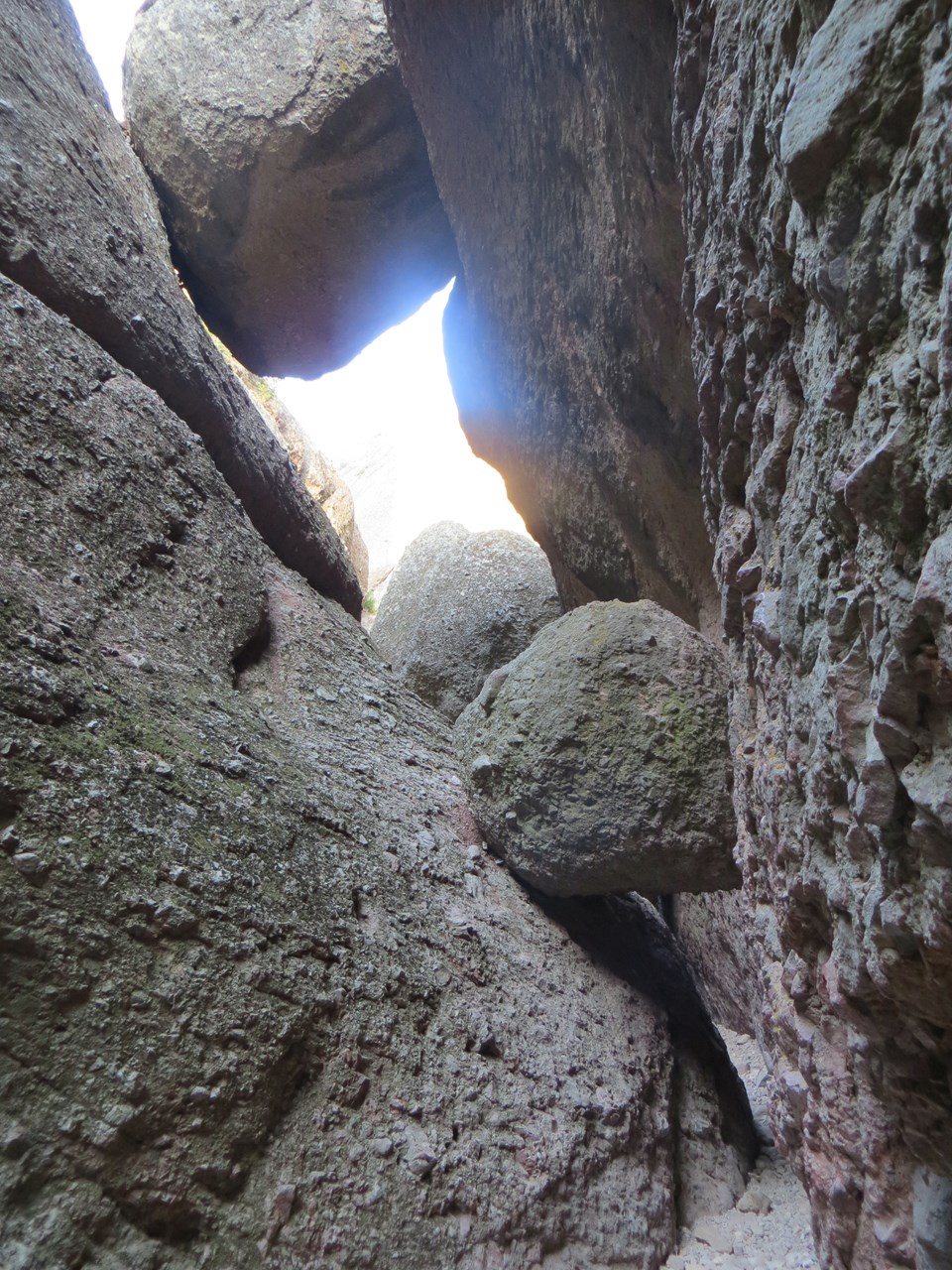
Balconies Cave is a cave in San Benito County, California. It lies in or next to Pinnacles National Park, so park hours, fees and rules apply. The nearest town is Soledad, about 14.4 km (8.9 mi) away (Balconies Cave lies NE of town).
From the National Park Service
a { text-decoration: none; color: #464feb; } tr th, tr td { border: 1px solid #e6e6e6; } tr th { background-color: #f5f5f5; } a { text-decoration: none; color: #464feb; } tr th, tr td { border: 1px solid #e6e6e6; } tr th { background-color: #f5f5f5; } a { text-decoration: none; color: #464feb; } tr th, tr td { border: 1px solid #e6e6e6; } tr th { background-color: #f5f5f5; } At first glance, Pinnacles National Park is known for its towering rock spires, sweeping vistas, and sunlit chaparral-covered hillsides. Hidden among those dramatic landscapes, however, are the unexpected talus caves of the Balconies area. Formed by massive boulders wedged within narrow canyons, these caves offer a completely different experience, transporting visitors from bright open skies into cool, shadowy maze-like passageways. Located near the West Entrance of the park, Balconies Cave can be reached via the Balconies Trail or from the East Entrance by way of the Old Pinnacles Trail. Unlike the more developed Bear Gulch Cave, Balconies Cave provides a more primitive adventure, with rock scrambling, uneven footing, narrow passageways, and low rock ceilings. During periods of rain, water levels inside the cave can rise significantly and may reach thigh height for many adults. Visitors may also encounter flowing water within the cave and along portions of the approach route. Because of the cave's darkness, technical footing, and frequent need for both hands while scrambling over rocks, a headlamp is strongly recommended over a handheld cell phone light. While the cave is not used by bats for maternity roosting or hibernation, bats may still be present throughout the year. Visitors can help protect these animals by keeping noise levels low, avoiding flash photography and bright lights, and observing any bats from a respectful distance. For visitor safety, Balconies Cave may close due to flooding, fallen rocks, or other hazardous conditions. Visitors should also respect all trail and area closures, which help protect nesting and roosting raptors and other cliff-dwelling birds. Staying out of closed areas helps ensure wildlife can thrive while preserving opportunities for future visitors to experience these remarkable and unexpected caves.
For current cave conditions contact the park or visit Status of the Caves before your visit.
Text: National Park Service (public domain) — nps.gov.
Sunrise & sunset directions
At Balconies Cave the sunrise point swings a long way through the year: about 60° (ENE) at the June solstice and 119° (ESE) in late December. Sunset moves from 301° (WNW) in June to 241° (WSW) in December, and the midday sun climbs to 77° in summer but only 30° in winter.
| Date | Sunrise | Azimuth | Sunset | Azimuth | Noon sun | Daylight |
|---|---|---|---|---|---|---|
| March equinox (Mar 20) | 7:09 AM | 90° E | 7:17 PM | 271° W | 53° | 12h 08m |
| June solstice (Jun 21) | 5:48 AM | 60° ENE | 8:27 PM | 301° WNW | 77° | 14h 39m |
| September equinox (Sep 22) | 6:53 AM | 89° E | 7:03 PM | 271° W | 54° | 12h 10m |
| December solstice (Dec 21) | 7:14 AM | 119° ESE | 4:54 PM | 241° WSW | 30° | 9h 40m |
Azimuth is measured clockwise from true north (90° = east, 270° = west). Computed for 2026; values change by less than a degree from year to year.
Golden hour & blue hour by month
Caves are lit artificially — show caves have fixed lighting, so a fast lens and high ISO beat flash, which flattens formations.
| Month (15th) | Blue hour starts | Sunrise | Golden hour ends | Golden hour starts | Sunset | Blue hour ends | Daylight |
|---|---|---|---|---|---|---|---|
| January | 6:48 AM | 7:17 AM | 7:55 AM | 4:34 PM | 5:13 PM | 5:41 PM | 9h 57m |
| February | 6:27 AM | 6:54 AM | 7:29 AM | 5:10 PM | 5:46 PM | 6:12 PM | 10h 52m |
| March | 6:51 AM | 7:17 AM | 7:51 AM | 6:38 PM | 7:13 PM | 7:38 PM | 11h 56m |
| April | 6:05 AM | 6:32 AM | 7:06 AM | 7:05 PM | 7:39 PM | 8:06 PM | 13h 07m |
| May | 5:30 AM | 5:59 AM | 6:35 AM | 7:29 PM | 8:05 PM | 8:34 PM | 14h 07m |
| June | 5:16 AM | 5:47 AM | 6:25 AM | 7:47 PM | 8:25 PM | 8:56 PM | 14h 38m |
| July | 5:29 AM | 5:59 AM | 6:36 AM | 7:46 PM | 8:24 PM | 8:54 PM | 14h 25m |
| August | 5:56 AM | 6:23 AM | 6:59 AM | 7:22 PM | 7:57 PM | 8:24 PM | 13h 34m |
| September | 6:22 AM | 6:48 AM | 7:22 AM | 6:40 PM | 7:14 PM | 7:40 PM | 12h 26m |
| October | 6:47 AM | 7:13 AM | 7:47 AM | 5:55 PM | 6:30 PM | 6:56 PM | 11h 17m |
| November | 6:16 AM | 6:43 AM | 7:21 AM | 4:20 PM | 4:57 PM | 5:25 PM | 10h 14m |
| December | 6:42 AM | 7:10 AM | 7:50 AM | 4:11 PM | 4:51 PM | 5:20 PM | 9h 41m |
Local time (America/Los Angeles), including daylight saving time. Golden hour runs from about −4° to +6° solar altitude, so the morning golden hour begins during blue hour, before sunrise.
Milky Way & night sky
From Balconies Cave, the Milky Way core is visible in a dark sky from February through October. June gives the longest window (about 5.5 hours on a moonless night), and the core peaks around 25° above the southern horizon. Our light-pollution model puts the sky at about Bortle 4 (rural / suburban transition), good enough for detailed Milky Way images.
| Month | Core visible (15th) | Hours | Max altitude | Direction |
|---|---|---|---|---|
| January | Below 10° in darkness | — | 0° | — |
| February | 4:53 AM – 5:23 AM | 0.5 | 14° | SE → SE |
| March | 4:09 AM – 5:49 AM | 1.7 | 21° | SE → SSE |
| April | 2:00 AM – 4:50 AM | 2.8 | 24° | SE → S |
| May | 12:07 AM – 4:07 AM | 4.0 | 25° | SE → SSW |
| June | 10:16 PM – 3:46 AM | 5.5 | 25° | SE → SW |
| July | 10:11 PM – 2:31 AM | 4.3 | 25° | SSE → SW |
| August | 9:32 PM – 12:22 AM | 2.8 | 24° | S → SW |
| September | 8:41 PM – 10:21 PM | 1.7 | 21° | SSW → SW |
| October | 7:56 PM – 8:26 PM | 0.5 | 14° | SW → SW |
| November | Below 10° in darkness | — | 1° | — |
| December | Below 10° in darkness | — | -19° | — |
Window when the galactic core is at least 10° high during astronomical darkness on the 15th of each month. Pick nights within a few days of the new moon. Plan exact nights with the Milky Way planner.
Estimated sky darkness: 4 Bortle 4 — Rural / suburban transition. Light domes are visible in several directions; the Milky Way is clear but lacks detail near the horizon. Modeled zenith brightness ≈ 21.12 mag/arcsec².
Weather & best season
Long-term NASA satellite data for this area show June as the clearest month (about 26% average cloud cover) and December as the cloudiest (49%). July is the warmest month and December the coldest, which matters for gear, snow access and how long batteries last at night.
Average cloud cover (%)
| Jan | Feb | Mar | Apr | May | Jun | Jul | Aug | Sep | Oct | Nov | Dec | |
|---|---|---|---|---|---|---|---|---|---|---|---|---|
| High °F | 80 | 77 | 83 | 92 | 103 | 108 | 113 | 110 | 113 | 102 | 90 | 77 |
| Low °F | 20 | 26 | 28 | 30 | 37 | 42 | 47 | 48 | 44 | 36 | 27 | 24 |
| Precip. (in) | 3.4 | 3.7 | 2.9 | 1.4 | 0.5 | 0.1 | 0.0 | 0.0 | 0.1 | 1.0 | 1.9 | 4.1 |
Monthly climatology for the surrounding 1° grid cell from NASA POWER (MERRA-2). Mountain sites can be colder and cloudier than the cell average.
Photography tips for this cave
- Never touch formations — skin oils stop their growth.
- Follow White-nose Syndrome decontamination rules where posted to protect bats.
- Many show caves restrict tripods on tours; ask in advance or bring a small beanbag.
- Use manual focus with focus peaking in low light.
- Tell someone where you're going in remote areas and carry the ten essentials.
Season: Cave interiors stay at a constant temperature year-round; summer tours fill up, so book ahead.
Suggested gear: Fast lens (f/1.8–f/2.8), High-ISO camera, Small beanbag. Work out exposures with the depth of field, ND filter and NPF rule calculators.
Permits, drones & access
National Park Service rules. Under federal law (54 U.S.C. 100905), still photography in National Park Service areas needs a permit only when it (1) takes place where members of the public are not allowed, (2) uses models, sets or props that are not part of the location's natural or cultural resources or administrative facilities, or (3) would cause the park to incur additional administrative costs to monitor the activity. Ordinary visitor and most landscape photography needs no permit. Commercial filming rules are separate and have changed in recent years — confirm current requirements with the park before a paid shoot.
Drones: Launching, landing or operating unmanned aircraft (drones) is prohibited in National Park Service units under a 2014 Superintendent's closure (36 CFR 1.5), except where a park has issued specific written approval. Flying from outside the boundary over park land can also violate park rules and disturb wildlife.
Nearby photo spots
Other locations within 25 km of Balconies Cave, closest first.
 Scenic Viewpoint
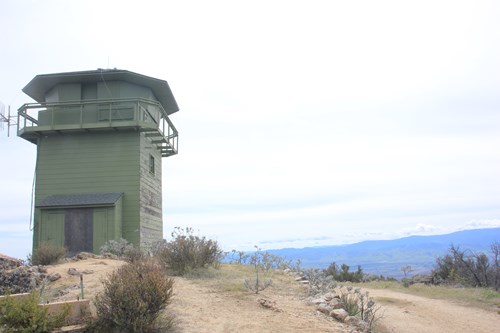
 Fire Lookout
 Scenic Viewpoint
 Mountain Pass
Campgrounds nearby (Recreation.gov)
FAQ
When is the best time to photograph Balconies Cave?
What time is golden hour at Balconies Cave?
Where does the sun rise and set at Balconies Cave?
Can you see the Milky Way from Balconies Cave?
Do you need a permit to photograph at Balconies Cave?
How far is Balconies Cave from Soledad?
Sources
Location data: National Park Service. Sun, moon and Milky Way times are computed by LWPhoto Atlas for 2026. Climate: NASA POWER. Sky darkness is a population-based estimate (Walker's law), not a measurement. See data sources & licenses.