
Johns Hopkins Glacier — a glacier in Hoonah-Angoon Census Area, Alaska at about 552 m (1,811 ft) above sea level — is a lesser-known subject for landscape photographers. It lies in or next to Glacier Bay National Park & Preserve, so park hours, fees and rules apply. The nearest town is Juneau, about 174 km (108 mi) away (Johns Hopkins Glacier lies WNW of town).
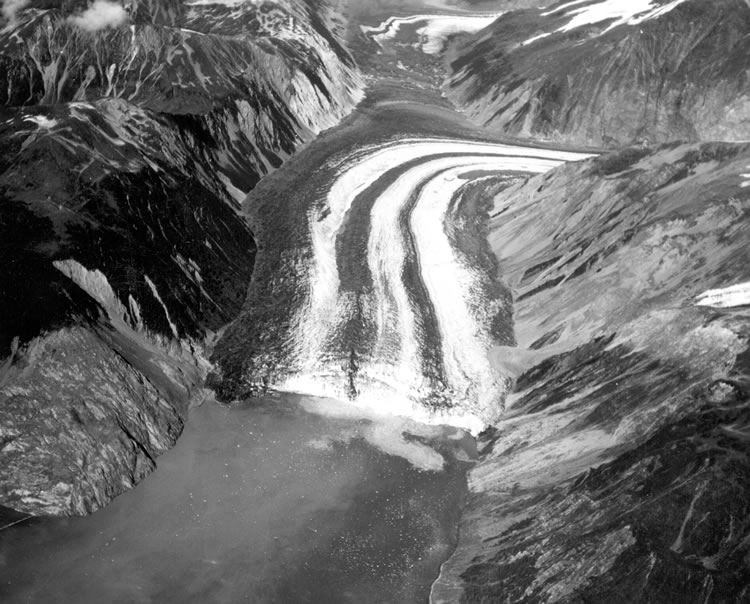
Johns Hopkins Glacier (Lingít: Tsalxaan Niyaadé Sít’) is a 12-mile (19 km) long glacier located in Glacier Bay National Park and Preserve in the U.S. state of Alaska. It was named after Johns Hopkins University in Baltimore, Maryland in 1893 by Harry Fielding Reid. It is one of the few advancing tidewater glaciers of the Fairweather Range.From the Wikipedia article “Johns Hopkins Glacier”, licensed under CC BY-SA 4.0.
Sunrise & sunset directions
At Johns Hopkins Glacier the sunrise point swings a long way through the year: about 38° (NE) at the June solstice and 138° (SE) in late December. Sunset moves from 323° (NW) in June to 222° (SW) in December, and the midday sun climbs to 55° in summer but only 8° in winter.
| Date | Sunrise | Azimuth | Sunset | Azimuth | Noon sun | Daylight |
|---|---|---|---|---|---|---|
| March equinox (Mar 20) | 7:11 AM | 89° E | 7:23 PM | 272° W | 31° | 12h 12m |
| June solstice (Jun 21) | 3:58 AM | 38° NE | 10:25 PM | 323° NW | 55° | 18h 26m |
| September equinox (Sep 22) | 6:55 AM | 88° E | 7:10 PM | 272° W | 31° | 12h 16m |
| December solstice (Dec 21) | 9:01 AM | 138° SE | 3:15 PM | 222° SW | 8° | 6h 14m |
Azimuth is measured clockwise from true north (90° = east, 270° = west). Computed for 2026; values change by less than a degree from year to year.
Golden hour & blue hour by month
Ice shows its blue best under overcast skies or in shade; bright sun turns glaciers white and flat.
| Month (15th) | Blue hour starts | Sunrise | Golden hour ends | Golden hour starts | Sunset | Blue hour ends | Daylight |
|---|---|---|---|---|---|---|---|
| January | 7:58 AM | 8:48 AM | 10:13 AM | 2:25 PM | 3:50 PM | 4:40 PM | 7h 01m |
| February | 7:01 AM | 7:44 AM | 8:45 AM | 4:03 PM | 5:04 PM | 5:47 PM | 9h 21m |
| March | 6:46 AM | 7:26 AM | 8:19 AM | 6:18 PM | 7:12 PM | 7:52 PM | 11h 46m |
| April | 5:12 AM | 5:56 AM | 6:51 AM | 7:28 PM | 8:23 PM | 9:07 PM | 14h 27m |
| May | 3:41 AM | 4:40 AM | 5:44 AM | 8:29 PM | 9:33 PM | 10:31 PM | 16h 53m |
| June | 2:35 AM | 3:59 AM | 5:12 AM | 9:08 PM | 10:22 PM | 11:45 PM | 18h 24m |
| July | 3:15 AM | 4:24 AM | 5:33 AM | 8:58 PM | 10:07 PM | 11:16 PM | 17h 43m |
| August | 4:41 AM | 5:30 AM | 6:27 AM | 8:01 PM | 8:59 PM | 9:47 PM | 15h 29m |
| September | 5:58 AM | 6:39 AM | 7:32 AM | 6:38 PM | 7:31 PM | 8:12 PM | 12h 52m |
| October | 7:06 AM | 7:47 AM | 8:43 AM | 5:07 PM | 6:04 PM | 6:45 PM | 10h 18m |
| November | 7:14 AM | 8:01 AM | 9:15 AM | 2:34 PM | 3:48 PM | 4:35 PM | 7h 47m |
| December | 8:03 AM | 8:56 AM | 10:39 AM | 1:31 PM | 3:14 PM | 4:07 PM | 6h 17m |
Local time (America/Juneau), including daylight saving time. Golden hour runs from about −4° to +6° solar altitude, so the morning golden hour begins during blue hour, before sunrise.
Milky Way & night sky
The Milky Way's bright core (in Sagittarius) barely clears the southern horizon at this latitude, so focus on winter Milky Way, aurora or star trails instead.
| Month | Core visible (15th) | Hours | Max altitude | Direction |
|---|---|---|---|---|
| January | Below 10° in darkness | — | -11° | — |
| February | Below 10° in darkness | — | -5° | — |
| March | Below 10° in darkness | — | -2° | — |
| April | Below 10° in darkness | — | -3° | — |
| May | Below 10° in darkness | — | -1° | — |
| June | No darkness | — | — | — |
| July | No darkness | — | — | — |
| August | Below 10° in darkness | — | 0° | — |
| September | Below 10° in darkness | — | -4° | — |
| October | Below 10° in darkness | — | -5° | — |
| November | Below 10° in darkness | — | -10° | — |
| December | Below 10° in darkness | — | -21° | — |
Window when the galactic core is at least 10° high during astronomical darkness on the 15th of each month. Pick nights within a few days of the new moon. Plan exact nights with the Milky Way planner.
Estimated sky darkness: 1 Bortle 1 — Excellent dark-sky site. The Milky Way casts faint shadows; zodiacal light and airglow are obvious. Modeled zenith brightness ≈ 21.95 mag/arcsec². Aurora needs roughly Kp 0.5+ to show low on the northern horizon here.
Weather & best season
Long-term NASA satellite data for this area show April as the clearest month (about 74% average cloud cover) and December as the cloudiest (81%). August is the warmest month and March the coldest, which matters for gear, snow access and how long batteries last at night.
Average cloud cover (%)
| Jan | Feb | Mar | Apr | May | Jun | Jul | Aug | Sep | Oct | Nov | Dec | |
|---|---|---|---|---|---|---|---|---|---|---|---|---|
| High °F | 43 | 41 | 44 | 47 | 54 | 68 | 69 | 68 | 60 | 51 | 46 | 42 |
| Low °F | -3 | 0 | -2 | 15 | 28 | 35 | 40 | 43 | 37 | 21 | 5 | -1 |
| Precip. (in) | 17.8 | 14.5 | 11.6 | 10.8 | 9.2 | 7.1 | 8.7 | 13.2 | 18.8 | 20.2 | 19.7 | 20.0 |
Monthly climatology for the surrounding 1° grid cell from NASA POWER (MERRA-2). Mountain sites can be colder and cloudier than the cell average.
Photography tips for this glacier
- Boat tours to tidewater glaciers offer calving shots; use fast shutter speeds and a telephoto.
- Never walk on a glacier without training and gear; crevasses hide under snow bridges.
- Expose carefully: ice and snow fool meters into underexposure, so add +1 to +2 stops.
- A polarizer deepens the blue of glacial ice and the turquoise of meltwater lakes.
- Shoot RAW to keep the most latitude for high-contrast sunrise and sunset scenes.
Season: Summer offers access; late summer exposes the most bare ice before new snow.
Suggested gear: Telephoto lens, Polarizer, Waterproof shell, Spare batteries (cold drains them). Work out exposures with the depth of field, ND filter and NPF rule calculators.
Permits, drones & access
National Park Service rules. Under federal law (54 U.S.C. 100905), still photography in National Park Service areas needs a permit only when it (1) takes place where members of the public are not allowed, (2) uses models, sets or props that are not part of the location's natural or cultural resources or administrative facilities, or (3) would cause the park to incur additional administrative costs to monitor the activity. Ordinary visitor and most landscape photography needs no permit. Commercial filming rules are separate and have changed in recent years — confirm current requirements with the park before a paid shoot.
Drones: Launching, landing or operating unmanned aircraft (drones) is prohibited in National Park Service units under a 2014 Superintendent's closure (36 CFR 1.5), except where a park has issued specific written approval. Flying from outside the boundary over park land can also violate park rules and disturb wildlife.
Nearby photo spots
Other locations within 25 km of Johns Hopkins Glacier, closest first.
 Mountain Peak
 Glacier
 Mountain Peak
 Mountain Peak
 Mountain Peak
 Glacier
 Mountain Peak
 Mountain Peak
 Glacier
FAQ
When is the best time to photograph Johns Hopkins Glacier?
What time is golden hour at Johns Hopkins Glacier?
Where does the sun rise and set at Johns Hopkins Glacier?
Can you see the Milky Way from Johns Hopkins Glacier?
Do you need a permit to photograph at Johns Hopkins Glacier?
How far is Johns Hopkins Glacier from Juneau?
Sources
Location data: Wikidata, USGS GNIS / GeoNames, Wikipedia. Sun, moon and Milky Way times are computed by LWPhoto Atlas for 2026. Climate: NASA POWER. Sky darkness is a population-based estimate (Walker's law), not a measurement. See data sources & licenses.