Top lighthouses
 Lighthouse
Bodie Island Light
 Lighthouse
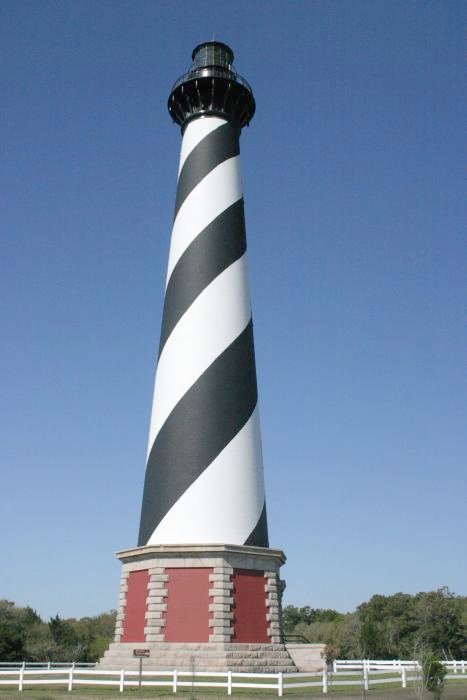
Cape Hatteras Lighthouse
 Lighthouse
Currituck Beach Lighthouse
 Lighthouse
Cape Lookout Lighthouse
 Lighthouse
Oak Island Light
 Lighthouse
Bald Head Lighthouse
 Lighthouse
Ocracoke Light
 Lighthouse
Roanoke Marshes Light
 Lighthouse
Diamond Shoal Light
 Lighthouse
Frying Pan Shoals Light
 Lighthouse
Cape Fear Light
 Lighthouse
Price Creek Light
Lighthouses by county
All lighthouses (16)
| Name | County | Elevation | Nearest town | Sky |
|---|---|---|---|---|
| Bodie Island LightCape Hatteras | Dare County | 1 m | Wanchese | 2 |
| Cape Hatteras LighthouseCape Hatteras | Dare County | 3 m | Buxton | 1 |
| Currituck Beach Lighthouse | Currituck County | 2 m | Southern Shores | 3 |
| Cape Lookout LighthouseCape Lookout | Carteret County | 1 m | Harkers Island | 2 |
| Oak Island Light | Brunswick County | 3 m | Southport | 4 |
| Bald Head Lighthouse | Brunswick County | 3 m | Southport | 4 |
| Ocracoke Light | Hyde County | — | Buxton | 2 |
| Roanoke Marshes Light | Dare County | — | Wanchese | 2 |
| Diamond Shoal Light | Dare County | — | Buxton | 1 |
| Frying Pan Shoals Light | Brunswick County | — | Carolina Beach | 2 |
| Cape Fear Light | Brunswick County | — | Southport | 4 |
| Price Creek Light | Brunswick County | — | Southport | 4 |
| Roanoke River Light | Chowan County | — | Edenton | 5 |
| Wade Point Light | Camden County | — | Southern Shores | 3 |
| Cape Hatteras Light StationCape Hatteras | Dare County | — | Buxton | 1 |
| Prices Creek Lighthouse | Brunswick County | 1 m | Southport | 4 |
Sky = estimated Bortle class (1 darkest – 9 brightest).
Map
How to photograph lighthouses
Lighthouses work at both ends of the day: blue hour when the beacon is lit, and golden hour when white towers take on warm tones.
- During blue hour, use 5–15 second exposures to capture the beam; check whether the light is still active.
- Shoot from the beach or a jetty to place the tower against open sky and sea.
- Stormy weather and crashing surf add drama; keep a safe distance from waves on rocks and piers.
- A telephoto from across a bay compresses the tower against cliffs or the moon.
- Many lighthouses are on private or Coast Guard property — check public access and opening hours.
Season: Summer brings open towers and tours; autumn and winter offer storms, fewer crowds and lower sun angles.