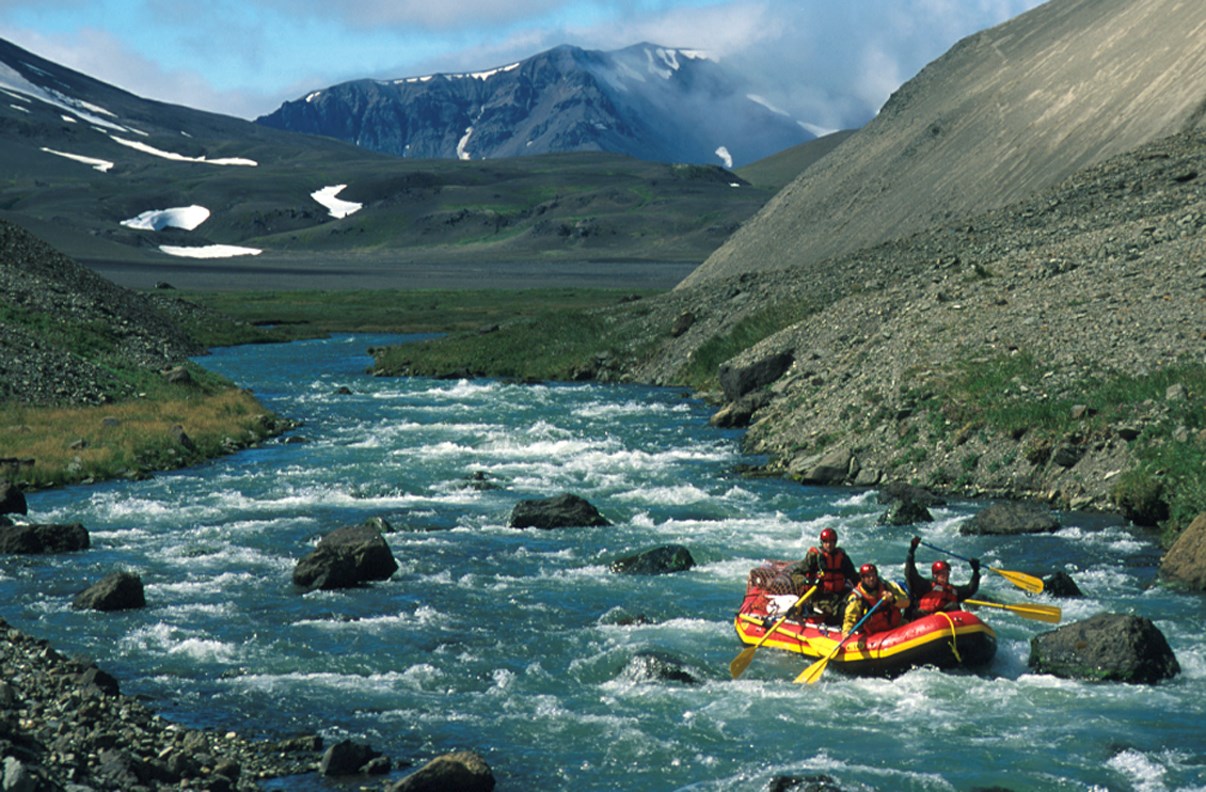
Aniakchak National Monument & Preserve is a National Monument & Preserve in Alaska. This guide combines the park's official information with computed sunrise, sunset and Milky Way times, satellite climate data and nearby photo locations.
Sunrise, sunset & golden hour
At Aniakchak the sunrise point swings a long way through the year: about 42° (NE) at the June solstice and 135° (SE) in late December. Sunset moves from 319° (NW) in June to 225° (SW) in December, and the midday sun climbs to 57° in summer but only 10° in winter.
| Month (15th) | Sunrise | Golden hour ends | Golden hour starts | Sunset | Sunset az. | Daylight |
|---|---|---|---|---|---|---|
| January | 9:57 AM | 11:11 AM | 4:10 PM | 5:24 PM | 231° | 7h 27m |
| February | 8:59 AM | 9:55 AM | 5:35 PM | 6:32 PM | 248° | 9h 33m |
| March | 8:46 AM | 9:37 AM | 7:43 PM | 8:34 PM | 268° | 11h 47m |
| April | 7:23 AM | 8:14 AM | 8:47 PM | 9:39 PM | 290° | 14h 16m |
| May | 6:13 AM | 7:12 AM | 9:43 PM | 10:42 PM | 308° | 16h 29m |
| June | 5:37 AM | 6:44 AM | 10:19 PM | 11:26 PM | 318° | 17h 48m |
| July | 6:00 AM | 7:03 AM | 10:10 PM | 11:13 PM | 314° | 17h 13m |
| August | 6:59 AM | 7:53 AM | 9:18 PM | 10:12 PM | 298° | 15h 13m |
| September | 8:02 AM | 8:52 AM | 8:00 PM | 8:50 PM | 277° | 12h 48m |
| October | 9:04 AM | 9:57 AM | 6:36 PM | 7:29 PM | 256° | 10h 25m |
| November | 9:12 AM | 10:18 AM | 4:13 PM | 5:19 PM | 236° | 8h 07m |
| December | 10:02 AM | 11:27 AM | 3:26 PM | 4:50 PM | 226° | 6h 48m |
Computed for the park's reference point (56.8532, -157.5544); large parks span several minutes of difference.
Milky Way & dark skies
The Milky Way's bright core (in Sagittarius) barely clears the southern horizon at this latitude, so focus on winter Milky Way, aurora or star trails instead.
| Month | Core visible (15th) | Hours | Max altitude |
|---|---|---|---|
| January | Not visible in darkness | — | — |
| February | Not visible in darkness | — | — |
| March | Not visible in darkness | — | — |
| April | Not visible in darkness | — | — |
| May | Not visible in darkness | — | — |
| June | Not visible in darkness | — | — |
| July | Not visible in darkness | — | — |
| August | Not visible in darkness | — | — |
| September | Not visible in darkness | — | — |
| October | Not visible in darkness | — | — |
| November | Not visible in darkness | — | — |
| December | Not visible in darkness | — | — |
1 Estimated Bortle 1 — Excellent dark-sky site. The Milky Way casts faint shadows; zodiacal light and airglow are obvious.
Weather & best time to visit
When you visit, be prepared to encounter all types of weather. On average, wet and cool conditions predominate in spring, summer, and fall. Strong winds can delay the departure and arrival of boats and floatplanes.
Weather overview: National Park Service.
Long-term NASA satellite data for this area show March as the clearest month (about 74% average cloud cover) and February as the cloudiest (81%). August is the warmest month and March the coldest, which matters for gear, snow access and how long batteries last at night.
Average cloud cover (%)
Average high (°F)
Photography permits, drones & fees
Permits. Under federal law (54 U.S.C. 100905), still photography in National Park Service areas needs a permit only when it (1) takes place where members of the public are not allowed, (2) uses models, sets or props that are not part of the location's natural or cultural resources or administrative facilities, or (3) would cause the park to incur additional administrative costs to monitor the activity. Ordinary visitor and most landscape photography needs no permit. Commercial filming rules are separate and have changed in recent years — confirm current requirements with the park before a paid shoot.
Drones. Launching, landing or operating unmanned aircraft (drones) is prohibited in National Park Service units under a 2014 Superintendent's closure (36 CFR 1.5), except where a park has issued specific written approval. Flying from outside the boundary over park land can also violate park rules and disturb wildlife.
Getting there
Located on the Alaska Peninsula, 450 miles southwest of Anchorage, Aniakchak National Monument and Preserve is inaccessible by road. Notoriously bad weather makes access to Aniakchak unpredictable. Drop-offs and/or pick-ups may be significantly delayed.
Directions: National Park Service.
Activities
- Camping
- Backcountry Camping
- Climbing
- Mountain Climbing
- Flying
- Hiking
- Backcountry Hiking
- Paddling
- Whitewater Rafting
- Wildlife Watching
- Birdwatching