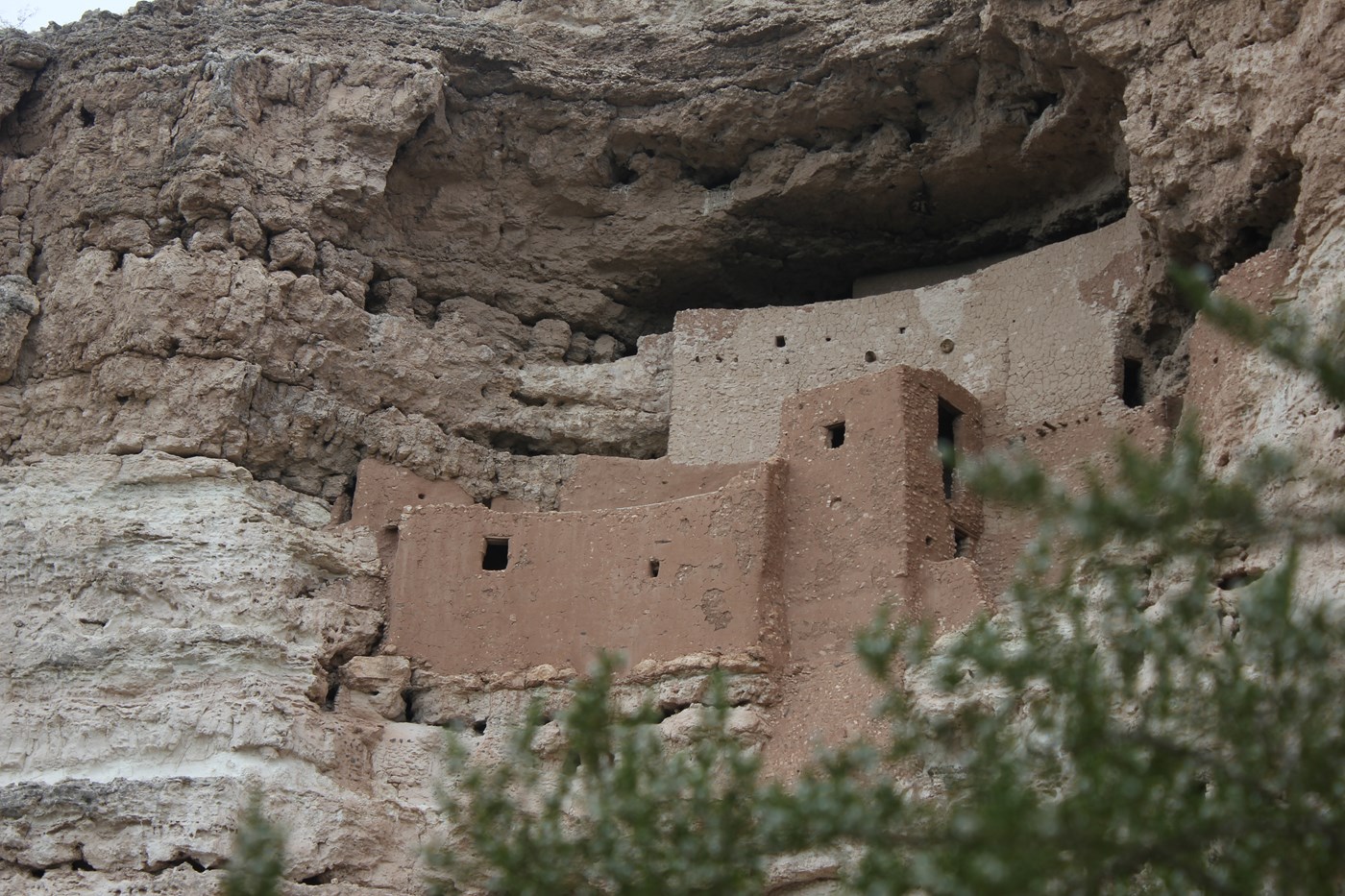
Montezuma Castle National Monument is a National Monument in Arizona. This guide combines the park's official information with computed sunrise, sunset and Milky Way times, satellite climate data and 2 photo locations inside or next to the park.
Best photo spots in Montezuma Castle
We matched 2 named overlooks, waterfalls, peaks and other features to Montezuma Castle. Each has its own page with sun directions and a monthly golden hour table.
Dark Sky Places (1)
State Parks (1)
Sunrise, sunset & golden hour
At Montezuma Castle the sunrise point swings a long way through the year: about 61° (ENE) at the June solstice and 118° (ESE) in late December. Sunset moves from 300° (WNW) in June to 242° (WSW) in December, and the midday sun climbs to 79° in summer but only 32° in winter.
| Month (15th) | Sunrise | Golden hour ends | Golden hour starts | Sunset | Sunset az. | Daylight |
|---|---|---|---|---|---|---|
| January | 7:35 AM | 8:12 AM | 5:02 PM | 5:40 PM | 245° | 10h 05m |
| February | 7:14 AM | 7:48 AM | 5:36 PM | 6:11 PM | 255° | 10h 57m |
| March | 6:39 AM | 7:12 AM | 6:02 PM | 6:35 PM | 268° | 11h 57m |
| April | 5:56 AM | 6:30 AM | 6:26 PM | 6:59 PM | 283° | 13h 03m |
| May | 5:25 AM | 6:01 AM | 6:48 PM | 7:24 PM | 294° | 13h 58m |
| June | 5:15 AM | 5:52 AM | 7:05 PM | 7:42 PM | 300° | 14h 28m |
| July | 5:26 AM | 6:03 AM | 7:05 PM | 7:41 PM | 297° | 14h 15m |
| August | 5:49 AM | 6:23 AM | 6:42 PM | 7:17 PM | 288° | 13h 28m |
| September | 6:11 AM | 6:44 AM | 6:02 PM | 6:36 PM | 274° | 12h 25m |
| October | 6:33 AM | 7:07 AM | 5:20 PM | 5:54 PM | 260° | 11h 20m |
| November | 7:02 AM | 7:38 AM | 4:47 PM | 5:24 PM | 248° | 10h 22m |
| December | 7:28 AM | 8:06 AM | 4:40 PM | 5:19 PM | 242° | 9h 51m |
Computed for the park's reference point (34.6224, -111.8148); large parks span several minutes of difference.
Milky Way & dark skies
From Montezuma Castle, the Milky Way core is visible in a dark sky from February through October. June gives the longest window (about 6.0 hours on a moonless night), and the core peaks around 27° above the southern horizon. Our light-pollution model puts the sky at about Bortle 5 (suburban sky), so expect visible sky glow; drive away from towns for better results.
| Month | Core visible (15th) | Hours | Max altitude |
|---|---|---|---|
| January | Not visible in darkness | — | — |
| February | 5:05 AM – 5:45 AM | 0.7 | 16° |
| March | 3:19 AM – 5:09 AM | 1.8 | 23° |
| April | 1:17 AM – 4:17 AM | 3.0 | 26° |
| May | 11:21 PM – 3:41 AM | 4.3 | 27° |
| June | 9:28 PM – 3:28 AM | 6.0 | 27° |
| July | 9:23 PM – 2:03 AM | 4.7 | 27° |
| August | 8:48 PM – 11:58 PM | 3.2 | 27° |
| September | 8:00 PM – 9:50 PM | 1.8 | 23° |
| October | 7:17 PM – 7:57 PM | 0.7 | 16° |
| November | Not visible in darkness | — | — |
| December | Not visible in darkness | — | — |
5 Estimated Bortle 5 — Suburban sky. The Milky Way is weak near the horizon and washed out overhead; long exposures pick up a sky glow.
Weather & best time to visit
Summer: Hot. Temperatures range from 95°F (35°C) to 115°F (46°C). Nighttime temperatures can be much cooler, around 70°F (21°C). From July through September, heavy rains called monsoons are common in the afternoons. Winter: Cool. Highs average around 55°F (13°C); lows may be in the teens (-10°C). Snow is rare, but possible. For detailed information, visit the National Weather Service: http://forecast.weather.gov/MapClick.php?lat=34.61151944900047&lon=-111.8389592099997#.Vi_FZX6rSUk
Weather overview: National Park Service.
Long-term NASA satellite data for this area show June as the clearest month (about 18% average cloud cover) and July as the cloudiest (51%). July is the warmest month and December the coldest, which matters for gear, snow access and how long batteries last at night.
Average cloud cover (%)
Average high (°F)
Photography permits, drones & fees
Permits. Under federal law (54 U.S.C. 100905), still photography in National Park Service areas needs a permit only when it (1) takes place where members of the public are not allowed, (2) uses models, sets or props that are not part of the location's natural or cultural resources or administrative facilities, or (3) would cause the park to incur additional administrative costs to monitor the activity. Ordinary visitor and most landscape photography needs no permit. Commercial filming rules are separate and have changed in recent years — confirm current requirements with the park before a paid shoot.
Drones. Launching, landing or operating unmanned aircraft (drones) is prohibited in National Park Service units under a 2014 Superintendent's closure (36 CFR 1.5), except where a park has issued specific written approval. Flying from outside the boundary over park land can also violate park rules and disturb wildlife.
| Entrance fee | Cost (USD) |
|---|---|
| Entrance - Per Person | $10.00 |
Fees as published by the NPS when this page was built — confirm on nps.gov before you go.
Getting there
Montezuma Castle: Follow I-17 to exit 289 (90 minutes north of Phoenix, 45 minutes south of Flagstaff). Drive east (through two traffic circles) for approximately 1/2 mile to the blinking red light. Turn left onto Montezuma Castle Road. Montezuma Well: Follow I-17 to exit 293 (north of the exit for Montezuma Castle). Continue through the towns of McGuireville and Rimrock, following the signs for 4 miles to the entrance to the Well.
Directions: National Park Service.
Activities
- Arts and Culture
- Cultural Demonstrations
- Astronomy
- Camping
- Food
- Picnicking
- Guided Tours
- Self-Guided Tours - Walking
- Junior Ranger Program
- Wildlife Watching
- Birdwatching
- Museum Exhibits
- Shopping
- Bookstore and Park Store
Nearby parks
 AZ
 AZ
 AZ
 AZ
 AZ
 AZ