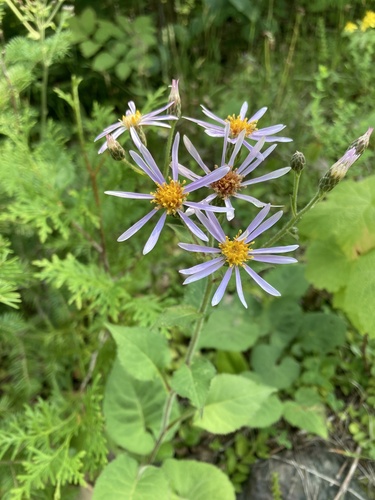
Large-Leaved Aster (Eurybia macrophylla) is in the Sunflowers, Daisies, Asters, and Allies family (Asteraceae). Across the U.S., iNaturalist users have logged 2,490 research-grade flowering observations of it in our sample, peaking in August.
Nationally it blooms mainly from August to September, but timing varies a lot by state and elevation — see the table below.
When to photograph Large-Leaved Aster: observations by month (U.S.)
About Large-Leaved Aster
Eurybia macrophylla, commonly known as the bigleaf aster, large-leaved aster, largeleaf aster or bigleaf wood aster, is an herbaceous perennial in the composite family that was formerly treated in the genus Aster. It is native to eastern North America, with a range extending from eastern and central Canada (from Nova Scotia to Manitoba) through the northeastern deciduous and mixed forests of New England and the Great Lakes region and south along the Appalachians as far as...From Wikipedia via iNaturalist — article, CC BY-SA.
Large-Leaved Aster by state
| State | Observations | Peak month | Main season |
|---|---|---|---|
| Minnesota | 799 | August | Jul–Sep |
| Michigan | 501 | August | Aug–Sep |
| Wisconsin | 497 | August | Aug–Sep |
| Maine | 237 | August | Aug–Sep |
| Vermont | 106 | August | Aug–Sep |
| New York | 89 | August | Aug–Sep |
| Ohio | 47 | August | Jul–Sep |
| New Hampshire | 42 | August | Aug–Sep |
| Illinois | 37 | September | Aug–Oct |
| Pennsylvania | 33 | September | Aug–Sep |
| Massachusetts | 30 | August | Jul–Sep |
| Connecticut | 26 | August | Aug–Sep |
| New Jersey | 10 | August | Aug–Sep |
| Virginia | 9 | August | Jul–Sep |
| Indiana | 7 | September | Aug–Sep |
| Maryland | 6 | September | Aug–Oct |
| Kentucky | 5 | August | Jul–Sep |
Main season = months with at least 30% of the state's peak-month count.
Related wildflowers (Sunflowers, Daisies, Asters, and Allies)
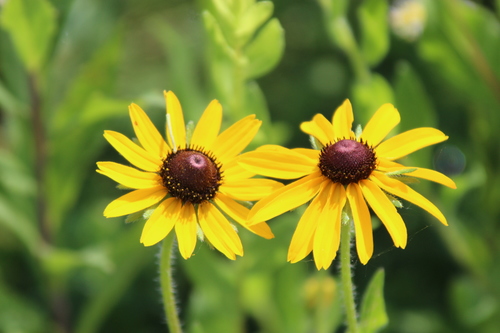
black-eyed Susan
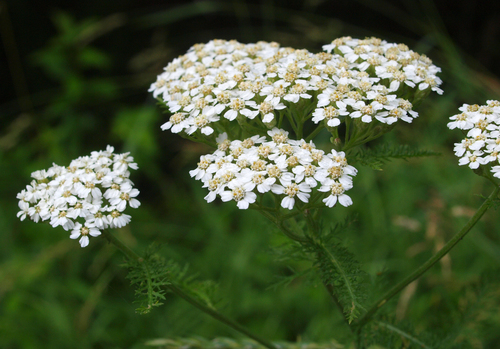
Common Yarrow
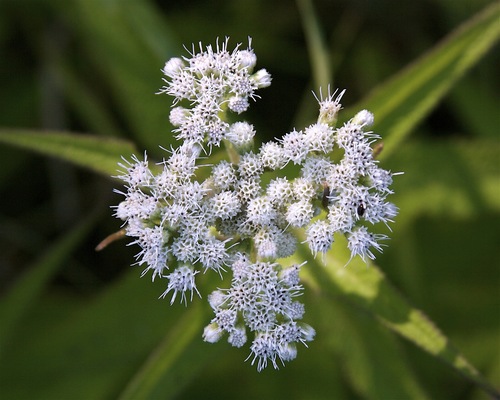
White Snakeroot

Chicory
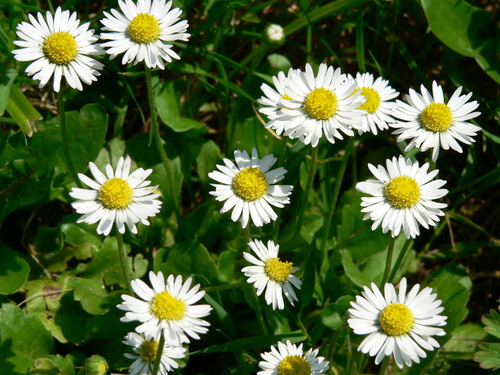
Lawn daisy
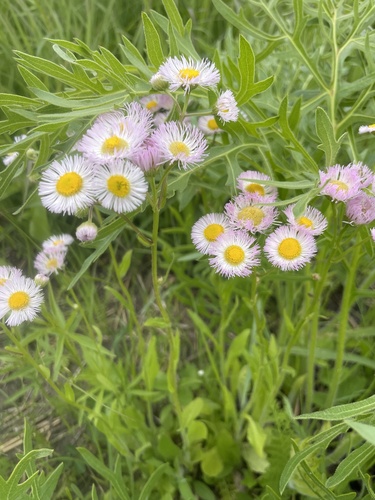
Philadelphia fleabane

Pearly Everlasting
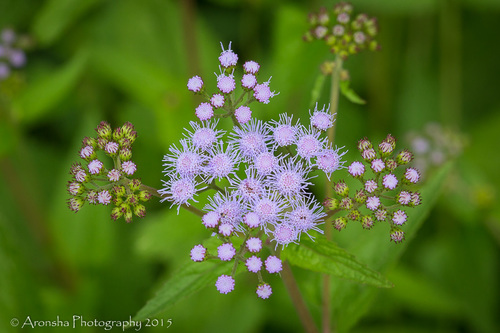
Blue Mistflower
Photography tips
- Photograph flowers on calm, overcast mornings to avoid wind blur and harsh shadows.
- Get low: a shallow depth of field (f/2.8–f/5.6) isolates a bloom against soft color.
- Stay on trails — trampling meadows kills plants and ruins next year's display.
- Try a kaleidoscope abstract of a single bloom with our online kaleidoscope tool.
FAQ
When is the best time to photograph Large-Leaved Aster?
Nationally, August has the most observations, with the main season from August to September.
Where is Large-Leaved Aster most often seen?
The most observations come from Minnesota, Michigan, Wisconsin.