
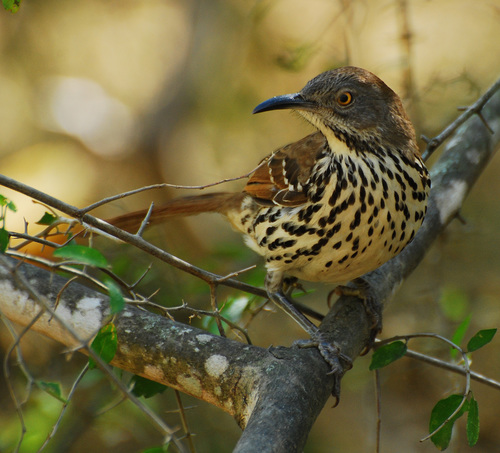
Long-billed Thrasher (Toxostoma longirostre) is in the Mockingbirds and Thrashers family (Mimidae). Across the U.S., iNaturalist users have logged 4,137 research-grade observations of it in our sample, peaking in April.
Seasonal pattern in the national data: winter visitor. Counts also reflect when people are out photographing, so compare months within a state rather than across states.
When to photograph Long-billed Thrasher: observations by month (U.S.)
About Long-billed Thrasher
The long-billed thrasher (Toxostoma longirostre) is a medium-sized resident songbird of South Texas and eastern Mexico. It bears a strong resemblance to its close relative the brown thrasher in appearance, calls, and various other behaviors; however, the two species do not overlap in range except in the winter when the brown thrasher will temporarily reside in the northern range of the long-billed.From Wikipedia via iNaturalist — article, CC BY-SA.
Long-billed Thrasher by state
| State | Observations | Peak month | Main season |
|---|---|---|---|
| Texas | 4,136 | April | Nov–May |
Main season = months with at least 30% of the state's peak-month count.
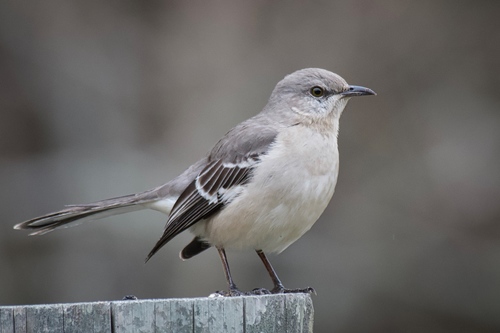
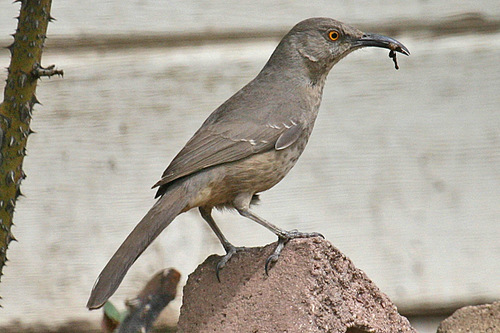
Related birds (Mockingbirds and Thrashers)
Photography tips
- Use a fast shutter (1/2000 s or faster) for birds in flight.
- Focus on the eye and shoot at the bird's eye level.
- Approach slowly and stop if the bird changes behavior; never bait or flush birds.
- Morning activity peaks in the first two hours after sunrise.
FAQ
When is the best time to photograph Long-billed Thrasher?
Nationally, April has the most observations, with the main season from November to May.
Where is Long-billed Thrasher most often seen?
The most observations come from Texas.