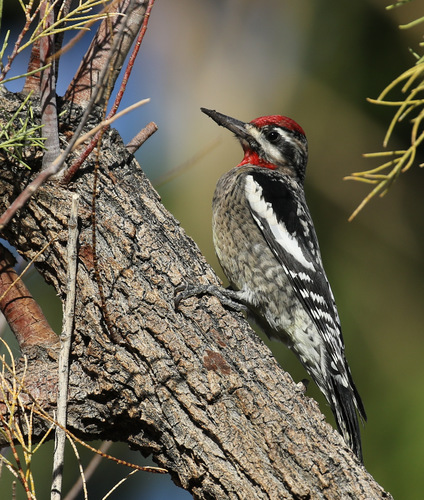
Red-naped Sapsucker (Sphyrapicus nuchalis) is in the Woodpeckers family (Picidae). Across the U.S., iNaturalist users have logged 5,166 research-grade observations of it in our sample, peaking in July.
Seasonal pattern in the national data: year-round resident. Counts also reflect when people are out photographing, so compare months within a state rather than across states.
When to photograph Red-naped Sapsucker: observations by month (U.S.)
About Red-naped Sapsucker
The red-naped sapsucker (Sphyrapicus nuchalis) is a medium-sized North American woodpecker. Long thought to be a subspecies of the yellow-bellied sapsucker, it is now known to be a distinct species.From Wikipedia via iNaturalist — article, CC BY-SA.
Red-naped Sapsucker by state
| State | Observations | Peak month | Main season |
|---|---|---|---|
| Arizona | 1,158 | October | Oct–Apr |
| Colorado | 761 | July | Jun–Sep |
| California | 606 | January | Oct–Mar |
| New Mexico | 410 | October | Mar–Dec |
| Montana | 336 | May | Apr–Sep |
| Utah | 308 | October | Jun–Nov |
| Idaho | 303 | June | Apr–Sep |
| Texas | 295 | October | Oct–Feb |
| Washington | 245 | June | Apr–Aug |
| Nevada | 202 | October | Sep–Feb |
| Wyoming | 190 | July | May–Aug |
| Oregon | 164 | June | Apr–Jul |
| South Dakota | 164 | June | May–Jul |
| Oklahoma | 9 | October | Sep–Oct |
| Nebraska | 8 | September | Sep–Sep |
Main season = months with at least 30% of the state's peak-month count.
Related birds (Woodpeckers)
Downy Woodpecker
Red-bellied Woodpecker
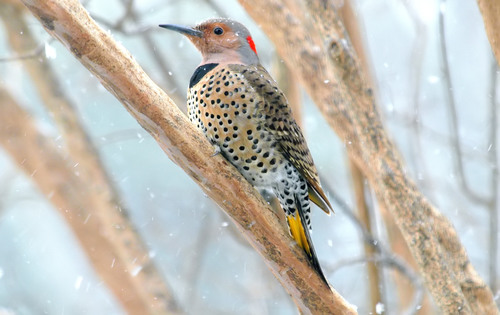
Northern Flicker
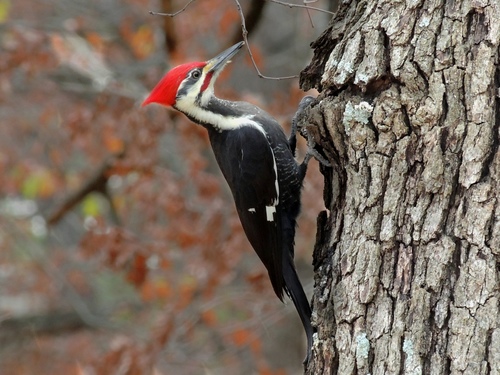
Pileated Woodpecker
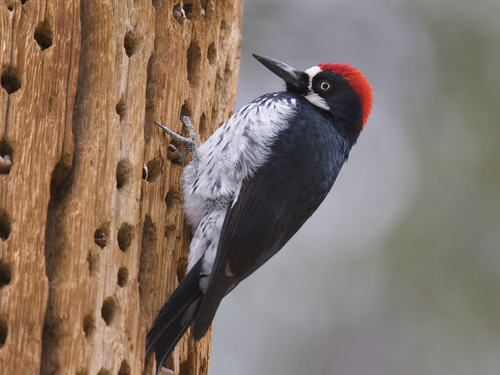
Acorn Woodpecker
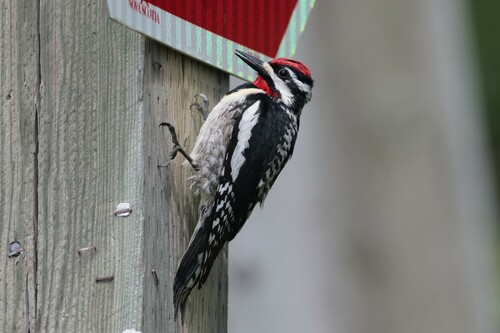
Yellow-bellied Sapsucker
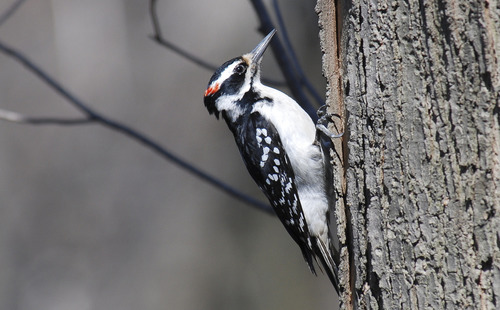
Hairy Woodpecker
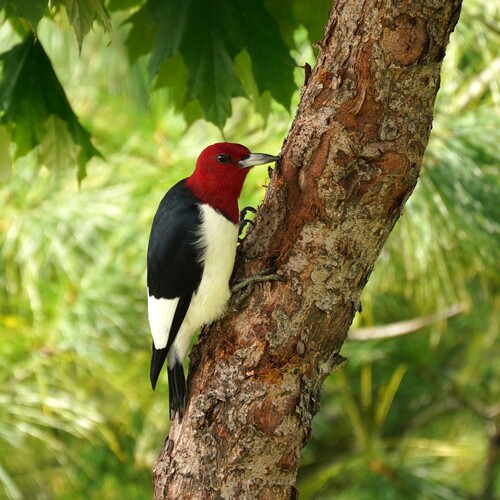
Red-headed Woodpecker
Photography tips
- Use a fast shutter (1/2000 s or faster) for birds in flight.
- Focus on the eye and shoot at the bird's eye level.
- Approach slowly and stop if the bird changes behavior; never bait or flush birds.
- Morning activity peaks in the first two hours after sunrise.
FAQ
When is the best time to photograph Red-naped Sapsucker?
Nationally, July has the most observations, with the main season from June to May.
Where is Red-naped Sapsucker most often seen?
The most observations come from Arizona, Colorado, California.