
Smyrna is a city of about 46,607 people in Rutherford County, Tennessee, at 166 m (545 ft). Today the sun rises at 6:58 AM and sets at 6:05 PM; the evening golden hour runs 5:30 PM – 6:21 PM. Below are monthly times, sun directions, the best photo locations within 80 km and the nearest dark skies.
Sunrise, sunset & golden hour by month
| Month (15th) | Sunrise | Golden hour ends | Golden hour starts | Sunset | Blue hour ends | Daylight |
|---|---|---|---|---|---|---|
| January | 6:57 AM | 7:35 AM | 4:17 PM | 4:56 PM | 5:23 PM | 9h 59m |
| February | 6:34 AM | 7:10 AM | 4:52 PM | 5:28 PM | 5:54 PM | 10h 54m |
| March | 6:58 AM | 7:32 AM | 6:20 PM | 6:54 PM | 7:19 PM | 11h 56m |
| April | 6:14 AM | 6:48 AM | 6:45 PM | 7:20 PM | 7:46 PM | 13h 06m |
| May | 5:41 AM | 6:18 AM | 7:09 PM | 7:45 PM | 8:14 PM | 14h 04m |
| June | 5:30 AM | 6:08 AM | 7:27 PM | 8:05 PM | 8:35 PM | 14h 35m |
| July | 5:41 AM | 6:19 AM | 7:27 PM | 8:04 PM | 8:33 PM | 14h 22m |
| August | 6:05 AM | 6:40 AM | 7:03 PM | 7:38 PM | 8:05 PM | 13h 32m |
| September | 6:29 AM | 7:03 AM | 6:21 PM | 6:55 PM | 7:21 PM | 12h 26m |
| October | 6:53 AM | 7:28 AM | 5:37 PM | 6:12 PM | 6:37 PM | 11h 18m |
| November | 6:23 AM | 7:01 AM | 4:02 PM | 4:40 PM | 5:07 PM | 10h 16m |
| December | 6:50 AM | 7:30 AM | 3:54 PM | 4:34 PM | 5:03 PM | 9h 44m |
Local time in America/Chicago, daylight saving time included.
Where the sun rises and sets in Smyrna
At Smyrna the sunrise point swings a long way through the year: about 60° (ENE) at the June solstice and 119° (ESE) in late December. Sunset moves from 300° (WNW) in June to 241° (WSW) in December, and the midday sun climbs to 77° in summer but only 31° in winter.
Best photo spots near Smyrna
37 photo locations lie within 80 km of Smyrna. Each links to a full planning page with sunrise and sunset directions.
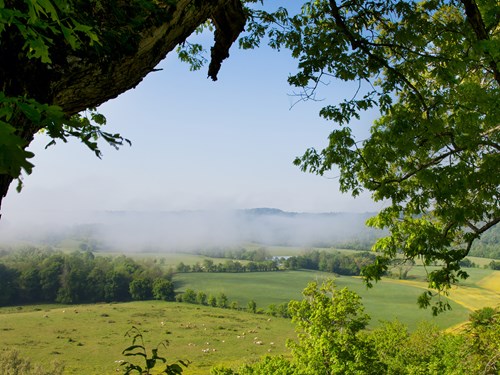
Scenic Viewpoints
 Scenic ViewpointScenic ViewpointScenic ViewpointScenic Viewpoint
 Scenic ViewpointScenic Viewpoint
Waterfalls
 WaterfallWaterfallWaterfallWaterfallWaterfallWaterfall
State Parks
 State Park
 State Park
 State Park
 State Park
 State Park
 State Park
Botanical Gardens

Natural Arches
Ghost Towns

Night sky, Milky Way & aurora
The sky over central Smyrna is estimated at Bortle 7 (suburban / urban transition). The nearest truly dark location in our database is Cumberland Overlook, about 136 km (85 mi) away (Bortle 2). The Milky Way core is up during darkness from February to October, best in June.
Darkest skies within 200 km
| Location | Type | Distance | Est. Bortle |
|---|---|---|---|
| Cumberland Overlook | Scenic Viewpoint | 136 km (85 mi) | 2 |
| Cordell Hull Birthplace State Park | State Park | 137 km (85 mi) | 2 |
| Lookout Point | Scenic Viewpoint | 147 km (91 mi) | 2 |
| Magendanz Falls | Waterfall | 152 km (95 mi) | 2 |
| Creelsboro Natural Bridge | Natural Arch | 152 km (95 mi) | 2 |
| Rock House Natural Bridge | Natural Arch | 152 km (95 mi) | 2 |
| Sgt. Alvin C. York State Historic Park | State Park | 153 km (95 mi) | 2 |
| Seventy Six Falls | Waterfall | 153 km (95 mi) | 2 |
| Month | Milky Way core window (15th) | Hours | Max altitude |
|---|---|---|---|
| February | 4:34 AM – 5:04 AM | 0.5 | 15° |
| March | 3:39 AM – 5:29 AM | 1.8 | 22° |
| April | 1:40 AM – 4:40 AM | 3.0 | 25° |
| May | 11:46 PM – 3:56 AM | 4.2 | 25° |
| June | 9:55 PM – 3:35 AM | 5.7 | 25° |
| July | 9:49 PM – 2:09 AM | 4.3 | 25° |
| August | 9:12 PM – 12:12 AM | 3.0 | 25° |
| September | 8:22 PM – 10:12 PM | 1.8 | 22° |
| October | 7:37 PM – 8:07 PM | 0.5 | 15° |
Cloud cover by month
Long-term NASA satellite data for this area show September as the clearest month (about 46% average cloud cover) and February as the cloudiest (68%). July is the warmest month and January the coldest, which matters for gear, snow access and how long batteries last at night.