
Located in Berks County, Pennsylvania, William Penn Memorial Fire Tower is a fire lookout. It sits roughly 2.3 km (1.4 mi) WNW of Pennside.
The William Penn Memorial Fire Tower is a fire lookout tower located on Mount Penn in Lower Alsace Township, Pennsylvania. Named after William Penn, the structure is owned by the city government of nearby Reading, Pennsylvania, which the tower overlooks. Work on the structure began in late 1938 as a project of the Works Progress Administration (WPA), with the tower completed the following year. The tower remained in regular use, both as a tourist attraction and as a legitimate lookout tower, for the next several decades, although deterioration to the building caused it to be closed in 1988. Starting in the late 1990s, a local nonprofit group began working to restore the tower, and it was reopened in 2004. The tower is listed on the National Historic Lookout Register, having been added in 1999.From the Wikipedia article “William Penn Memorial Fire Tower”, licensed under CC BY-SA 4.0.
Sunrise & sunset directions
At William Penn Memorial Fire Tower the sunrise point swings a long way through the year: about 58° (ENE) at the June solstice and 121° (ESE) in late December. Sunset moves from 302° (WNW) in June to 240° (WSW) in December, and the midday sun climbs to 73° in summer but only 26° in winter.
| Date | Sunrise | Azimuth | Sunset | Azimuth | Noon sun | Daylight |
|---|---|---|---|---|---|---|
| March equinox (Mar 20) | 7:08 AM | 90° E | 7:16 PM | 271° W | 50° | 12h 08m |
| June solstice (Jun 21) | 5:35 AM | 58° ENE | 8:38 PM | 302° WNW | 73° | 15h 03m |
| September equinox (Sep 22) | 6:52 AM | 89° E | 7:03 PM | 271° W | 50° | 12h 11m |
| December solstice (Dec 21) | 7:24 AM | 121° ESE | 4:41 PM | 240° WSW | 26° | 9h 17m |
Azimuth is measured clockwise from true north (90° = east, 270° = west). Computed for 2026; values change by less than a degree from year to year.
Golden hour & blue hour by month
Lookouts are built for 360° views, so sunrise and sunset are both options — use the azimuths to decide which view you want.
| Month (15th) | Blue hour starts | Sunrise | Golden hour ends | Golden hour starts | Sunset | Blue hour ends | Daylight |
|---|---|---|---|---|---|---|---|
| January | 6:55 AM | 7:25 AM | 8:07 AM | 4:20 PM | 5:02 PM | 5:32 PM | 9h 37m |
| February | 6:30 AM | 6:58 AM | 7:36 AM | 5:01 PM | 5:39 PM | 6:07 PM | 10h 41m |
| March | 6:49 AM | 7:16 AM | 7:52 AM | 6:35 PM | 7:11 PM | 7:38 PM | 11h 54m |
| April | 5:58 AM | 6:26 AM | 7:03 AM | 7:06 PM | 7:42 PM | 8:11 PM | 13h 16m |
| May | 5:18 AM | 5:48 AM | 6:27 AM | 7:34 PM | 8:13 PM | 8:44 PM | 14h 25m |
| June | 5:01 AM | 5:34 AM | 6:15 AM | 7:55 PM | 8:36 PM | 9:09 PM | 15h 02m |
| July | 5:15 AM | 5:47 AM | 6:27 AM | 7:53 PM | 8:33 PM | 9:05 PM | 14h 47m |
| August | 5:46 AM | 6:15 AM | 6:53 AM | 7:25 PM | 8:03 PM | 8:32 PM | 13h 47m |
| September | 6:18 AM | 6:45 AM | 7:21 AM | 6:38 PM | 7:14 PM | 7:42 PM | 12h 29m |
| October | 6:47 AM | 7:15 AM | 7:52 AM | 5:48 PM | 6:25 PM | 6:53 PM | 11h 10m |
| November | 6:21 AM | 6:50 AM | 7:31 AM | 4:08 PM | 4:48 PM | 5:17 PM | 9h 58m |
| December | 6:49 AM | 7:20 AM | 8:03 AM | 3:56 PM | 4:39 PM | 5:10 PM | 9h 19m |
Local time (America/New York), including daylight saving time. Golden hour runs from about −4° to +6° solar altitude, so the morning golden hour begins during blue hour, before sunrise.
Milky Way & night sky
From William Penn Memorial Fire Tower, the Milky Way core is visible in a dark sky from March through September. June gives the longest window (about 4.8 hours on a moonless night), and the core peaks around 21° above the southern horizon. Our light-pollution model puts the sky at about Bortle 8 (city sky), so expect visible sky glow; drive away from towns for better results.
| Month | Core visible (15th) | Hours | Max altitude | Direction |
|---|---|---|---|---|
| January | Below 10° in darkness | — | -2° | — |
| February | 5:21 AM – 5:21 AM | 0.0 | 11° | SE → SE |
| March | 4:32 AM – 5:42 AM | 1.2 | 17° | SE → SSE |
| April | 2:30 AM – 4:40 AM | 2.2 | 20° | SE → S |
| May | 12:25 AM – 3:55 AM | 3.5 | 21° | SE → S |
| June | 10:40 PM – 3:30 AM | 4.8 | 21° | SE → SSW |
| July | 10:32 PM – 2:02 AM | 3.5 | 21° | S → SW |
| August | 9:45 PM – 12:05 AM | 2.3 | 20° | S → SW |
| September | 8:47 PM – 9:57 PM | 1.2 | 17° | SSW → SW |
| October | 7:56 PM – 8:06 PM | 0.2 | 11° | SW → SW |
| November | Below 10° in darkness | — | 0° | — |
| December | Below 10° in darkness | — | -19° | — |
Window when the galactic core is at least 10° high during astronomical darkness on the 15th of each month. Pick nights within a few days of the new moon. Plan exact nights with the Milky Way planner.
Estimated sky darkness: 8 Bortle 8 — City sky. Only bright constellations are visible; the sky glows orange or white. Modeled zenith brightness ≈ 18.34 mag/arcsec². Aurora needs roughly Kp 6.5+ to show low on the northern horizon here.
Weather & best season
Long-term NASA satellite data for this area show September as the clearest month (about 52% average cloud cover) and December as the cloudiest (68%). July is the warmest month and January the coldest, which matters for gear, snow access and how long batteries last at night.
Average cloud cover (%)
| Jan | Feb | Mar | Apr | May | Jun | Jul | Aug | Sep | Oct | Nov | Dec | |
|---|---|---|---|---|---|---|---|---|---|---|---|---|
| High °F | 65 | 73 | 76 | 90 | 89 | 95 | 104 | 101 | 97 | 94 | 78 | 71 |
| Low °F | -7 | -11 | -8 | 21 | 28 | 41 | 49 | 50 | 38 | 24 | 10 | -3 |
| Precip. (in) | 2.9 | 3.1 | 3.5 | 3.8 | 3.9 | 4.9 | 4.9 | 4.5 | 4.8 | 4.4 | 3.5 | 3.9 |
Monthly climatology for the surrounding 1° grid cell from NASA POWER (MERRA-2). Mountain sites can be colder and cloudier than the cell average.
Photography tips for this fire lookout
- Shoot the tower itself against the Milky Way or star trails on clear, moonless nights.
- Haze from wildfire smoke can turn the sun deep red but reduce visibility; check air quality.
- Access roads may be rough or seasonal.
- Some lookouts can be rented overnight through recreation.gov, which puts you on site for both sunset and sunrise.
- Scout in daylight if you plan to shoot at night or before sunrise.
Season: Summer and early autumn; many towers are staffed only during fire season.
Suggested gear: Wide and telephoto lenses, Tripod, Warm layers. Work out exposures with the depth of field, ND filter and NPF rule calculators.
Nearby photo spots
Other locations within 25 km of William Penn Memorial Fire Tower, closest first.
 Botanical Garden
 Covered Bridge
 State Park
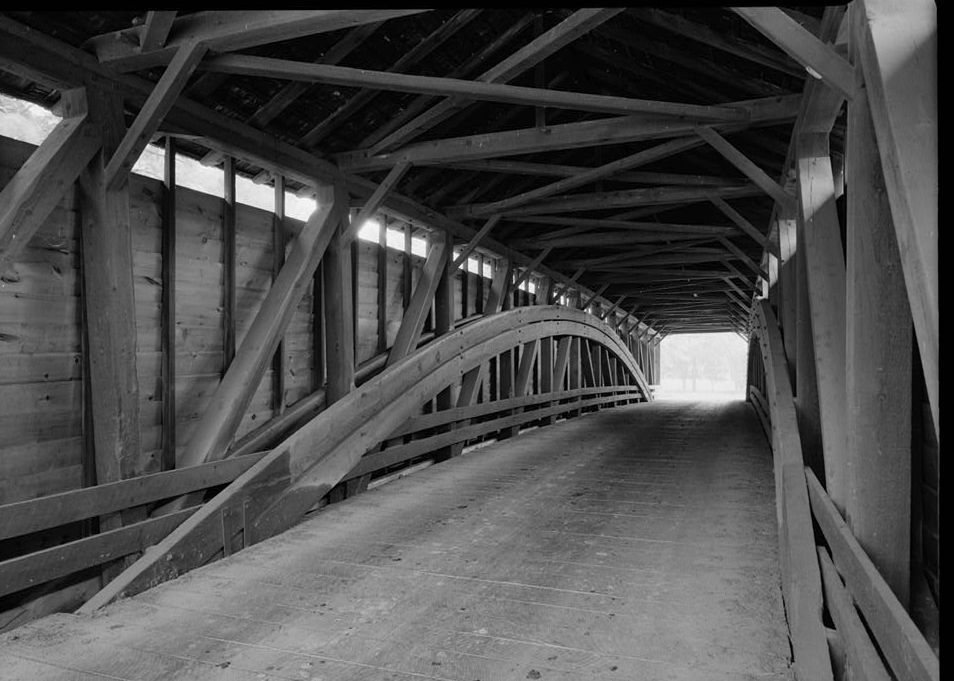 Covered Bridge
 Covered Bridge
 State Park
 Cave
 Covered Bridge
 Covered Bridge
Campgrounds nearby (Recreation.gov)
FAQ
When is the best time to photograph William Penn Memorial Fire Tower?
What time is golden hour at William Penn Memorial Fire Tower?
Where does the sun rise and set at William Penn Memorial Fire Tower?
Can you see the Milky Way from William Penn Memorial Fire Tower?
Do you need a permit to photograph at William Penn Memorial Fire Tower?
How far is William Penn Memorial Fire Tower from Pennside?
Sources
Location data: Wikidata, Wikipedia. Sun, moon and Milky Way times are computed by LWPhoto Atlas for 2026. Climate: NASA POWER. Sky darkness is a population-based estimate (Walker's law), not a measurement. See data sources & licenses.