
Fantasy Canyon — a canyon in Uintah County, Utah — is a rewarding subject for landscape photographers. The nearest town is Naples, about 42 km (26 mi) away (Fantasy Canyon lies SSE of town).
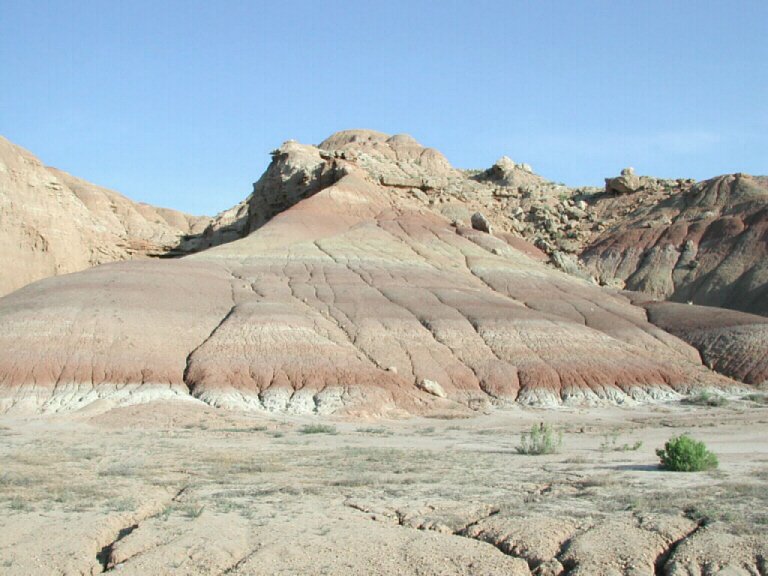
Fantasy Canyon is a 10-acre (40,000 m2) canyon containing unusual rock formations that were created through erosion and weathering. It is located about 27 miles (43 km) south of Vernal, in Uintah County, Utah, United States. Fantasy Canyon is managed by the Bureau of Land Management and is only accessible via the Fantasy Canyon Trail.From the Wikipedia article “Fantasy Canyon”, licensed under CC BY-SA 4.0.
Sunrise & sunset directions
At Fantasy Canyon the sunrise point swings a long way through the year: about 58° (ENE) at the June solstice and 121° (ESE) in late December. Sunset moves from 302° (WNW) in June to 240° (WSW) in December, and the midday sun climbs to 73° in summer but only 27° in winter.
| Date | Sunrise | Azimuth | Sunset | Azimuth | Noon sun | Daylight |
|---|---|---|---|---|---|---|
| March equinox (Mar 20) | 7:22 AM | 90° E | 7:30 PM | 271° W | 50° | 12h 08m |
| June solstice (Jun 21) | 5:49 AM | 58° ENE | 8:51 PM | 302° WNW | 73° | 15h 01m |
| September equinox (Sep 22) | 7:06 AM | 89° E | 7:16 PM | 271° W | 50° | 12h 10m |
| December solstice (Dec 21) | 7:37 AM | 121° ESE | 4:56 PM | 240° WSW | 27° | 9h 19m |
Azimuth is measured clockwise from true north (90° = east, 270° = west). Computed for 2026; values change by less than a degree from year to year.
Golden hour & blue hour by month
Canyons need light from above: rims glow at sunrise and sunset, while deep or narrow sections are brightest near midday when reflected light bounces off the walls.
| Month (15th) | Blue hour starts | Sunrise | Golden hour ends | Golden hour starts | Sunset | Blue hour ends | Daylight |
|---|---|---|---|---|---|---|---|
| January | 7:09 AM | 7:38 AM | 8:20 AM | 4:35 PM | 5:17 PM | 5:47 PM | 9h 38m |
| February | 6:44 AM | 7:12 AM | 7:49 AM | 5:16 PM | 5:54 PM | 6:22 PM | 10h 42m |
| March | 7:03 AM | 7:30 AM | 8:06 AM | 6:49 PM | 7:25 PM | 7:52 PM | 11h 55m |
| April | 6:12 AM | 6:40 AM | 7:17 AM | 7:20 PM | 7:56 PM | 8:24 PM | 13h 16m |
| May | 5:32 AM | 6:03 AM | 6:42 AM | 7:48 PM | 8:27 PM | 8:57 PM | 14h 24m |
| June | 5:16 AM | 5:49 AM | 6:30 AM | 8:08 PM | 8:49 PM | 9:22 PM | 15h 00m |
| July | 5:30 AM | 6:02 AM | 6:42 AM | 8:07 PM | 8:46 PM | 9:18 PM | 14h 45m |
| August | 6:01 AM | 6:30 AM | 7:07 AM | 7:39 PM | 8:16 PM | 8:45 PM | 13h 46m |
| September | 6:32 AM | 6:59 AM | 7:35 AM | 6:52 PM | 7:28 PM | 7:55 PM | 12h 29m |
| October | 7:01 AM | 7:29 AM | 8:05 AM | 6:03 PM | 6:39 PM | 7:07 PM | 11h 11m |
| November | 6:35 AM | 7:04 AM | 7:44 AM | 4:22 PM | 5:02 PM | 5:31 PM | 9h 59m |
| December | 7:03 AM | 7:33 AM | 8:16 AM | 4:11 PM | 4:54 PM | 5:24 PM | 9h 20m |
Local time (America/Denver), including daylight saving time. Golden hour runs from about −4° to +6° solar altitude, so the morning golden hour begins during blue hour, before sunrise.
Milky Way & night sky
From Fantasy Canyon, the Milky Way core is visible in a dark sky from March through September. June gives the longest window (about 4.8 hours on a moonless night), and the core peaks around 21° above the southern horizon. Our light-pollution model puts the sky at about Bortle 1 (excellent dark-sky site), which is excellent for astrophotography.
| Month | Core visible (15th) | Hours | Max altitude | Direction |
|---|---|---|---|---|
| January | Below 10° in darkness | — | -3° | — |
| February | 5:25 AM – 5:35 AM | 0.2 | 11° | SE → SE |
| March | 4:35 AM – 5:55 AM | 1.3 | 18° | SE → SSE |
| April | 2:33 AM – 4:53 AM | 2.3 | 21° | SE → S |
| May | 12:37 AM – 4:07 AM | 3.5 | 21° | SE → S |
| June | 10:52 PM – 3:42 AM | 4.8 | 21° | SE → SSW |
| July | 10:44 PM – 2:14 AM | 3.5 | 21° | S → SW |
| August | 9:58 PM – 12:18 AM | 2.3 | 21° | S → SW |
| September | 9:00 PM – 10:10 PM | 1.2 | 18° | SSW → SW |
| October | 8:10 PM – 8:20 PM | 0.2 | 11° | SW → SW |
| November | Below 10° in darkness | — | 0° | — |
| December | Below 10° in darkness | — | -19° | — |
Window when the galactic core is at least 10° high during astronomical darkness on the 15th of each month. Pick nights within a few days of the new moon. Plan exact nights with the Milky Way planner.
Estimated sky darkness: 1 Bortle 1 — Excellent dark-sky site. The Milky Way casts faint shadows; zodiacal light and airglow are obvious. Modeled zenith brightness ≈ 21.89 mag/arcsec². Aurora needs roughly Kp 7.5+ to show low on the northern horizon here.
Weather & best season
Long-term NASA satellite data for this area show September as the clearest month (about 38% average cloud cover) and February as the cloudiest (69%). July is the warmest month and January the coldest, which matters for gear, snow access and how long batteries last at night.
Average cloud cover (%)
| Jan | Feb | Mar | Apr | May | Jun | Jul | Aug | Sep | Oct | Nov | Dec | |
|---|---|---|---|---|---|---|---|---|---|---|---|---|
| High °F | 54 | 61 | 73 | 81 | 94 | 97 | 101 | 98 | 95 | 81 | 67 | 53 |
| Low °F | -15 | -11 | 1 | 14 | 20 | 31 | 44 | 39 | 28 | 2 | -1 | -11 |
| Precip. (in) | 0.6 | 0.6 | 0.7 | 1.0 | 1.1 | 0.7 | 0.7 | 1.0 | 1.3 | 1.1 | 0.7 | 0.7 |
Monthly climatology for the surrounding 1° grid cell from NASA POWER (MERRA-2). Mountain sites can be colder and cloudier than the cell average.
Photography tips for this canyon
- Check flash flood forecasts before entering slot or narrow canyons — rain miles away can flood them.
- Dust and sand are hard on gear; change lenses in a bag or with your back to the wind.
- A long lens on a tripod handles the low light inside canyons better than raising ISO.
- From the rim, sunrise and sunset side-light reveals layers; a telephoto picks out buttes and shadows.
- In narrow canyons, reflected light creates orange and purple glows; avoid including bright sky in the frame.
- Check road and trail conditions with the managing agency before you go.
Season: Spring and autumn are comfortable; summer monsoon storms bring dramatic skies but higher flood risk in the Southwest.
Suggested gear: Tripod, Wide and telephoto lenses, Lens blower, Weather radio or app. Work out exposures with the depth of field, ND filter and NPF rule calculators.
Nearby photo spots
Other locations within 25 km of Fantasy Canyon, closest first.
Campgrounds nearby (Recreation.gov)
FAQ
When is the best time to photograph Fantasy Canyon?
What time is golden hour at Fantasy Canyon?
Where does the sun rise and set at Fantasy Canyon?
Can you see the Milky Way from Fantasy Canyon?
Do you need a permit to photograph at Fantasy Canyon?
How far is Fantasy Canyon from Naples?
Sources
Location data: Wikidata, Wikipedia. Sun, moon and Milky Way times are computed by LWPhoto Atlas for 2026. Climate: NASA POWER. Sky darkness is a population-based estimate (Walker's law), not a measurement. See data sources & licenses.