Top waterfalls
 Waterfall
Bridal Veil Falls
 Waterfall
High Falls
 Waterfall
Hooker Falls
 Waterfall
Rainbow Falls
 Waterfall
Courthouse Falls
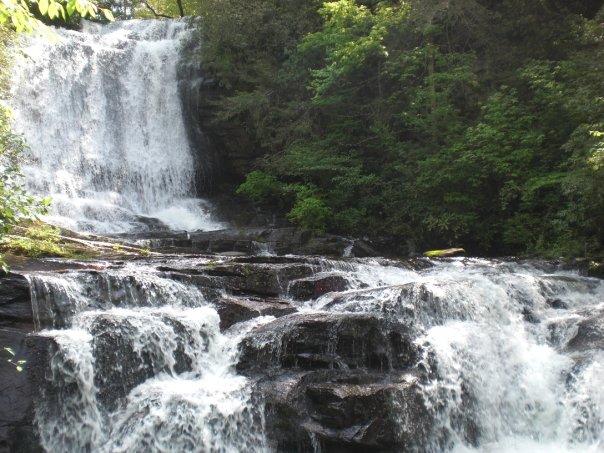 Waterfall
Connestee Falls and Batson Creek Falls
 Waterfall
Looking Glass Falls
 Waterfall
Triple Falls
 Waterfall
Eastatoe Falls
 Waterfall
Slick Rock Falls
 Waterfall
Turtleback Falls
 Waterfall
Sliding Rock
 Waterfall
Corbin Creek Falls
 Waterfall
Key Falls
 Waterfall
Cedar Rock Falls
 Waterfall
Moore Cove Falls
 Waterfall
Drift Falls
WaterfallWindy Falls
WaterfallBird Rock Falls
WaterfallCatheys Creek Falls
WaterfallDismal Falls
WaterfallGlencannon Falls
WaterfallHigh Falls
WaterfallLaughing Falls
Map
How to photograph waterfalls
Waterfalls photograph best in soft, even light: overcast days, deep shade, or the hour after sunrise before direct sun hits the water. Bright sun on white water blows highlights and adds harsh contrast.
- Use 1/4 to 1 second for a silky look; 1/500 s or faster freezes individual drops.
- A circular polarizer cuts glare on wet rocks and leaves and deepens greens — rotate it while watching the rocks, not the sky.
- Spring snowmelt and the days after heavy rain give the strongest flow; late summer flow can drop to a trickle.
- Look for a foreground: a mossy boulder, a fallen log or the creek's leading lines make a stronger frame than the falls alone.
- Keep a microfiber cloth handy — spray drifts onto the lens, especially at the plunge pool.
Season: Peak flow is usually in late spring; autumn adds color around the falls, and winter can bring ice formations at colder locations.