Top waterfalls
 Waterfall
Toketee Falls
 Waterfall
Watson Falls
 Waterfall
Wolf Creek Falls
 Waterfall
Yakso Falls
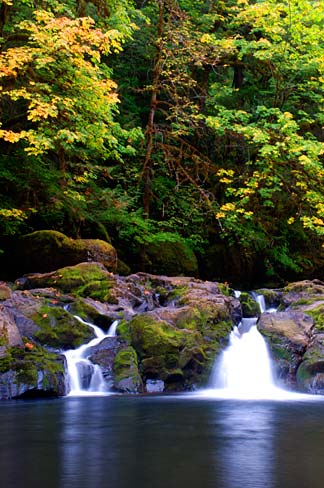 Waterfall
Cavitt Creek Falls
 Waterfall
Fall Creek Falls
 Waterfall
Whitehorse Falls
WaterfallClover Falls
WaterfallHemlock Falls
WaterfallDeer Lick Falls
WaterfallCampbell Falls
WaterfallClearwater Falls
WaterfallCavitt Falls
WaterfallEmile Falls
WaterfallGrotto Falls
WaterfallLemolo Falls
WaterfallLittle Falls
WaterfallMuir Creek Falls
WaterfallNorth Fork Falls
WaterfallShadow Falls
WaterfallSmith River Falls
WaterfallSouth Umpqua Falls
WaterfallSteamboat Falls
WaterfallSusan Creek Falls
Map
How to photograph waterfalls
Waterfalls photograph best in soft, even light: overcast days, deep shade, or the hour after sunrise before direct sun hits the water. Bright sun on white water blows highlights and adds harsh contrast.
- Use 1/4 to 1 second for a silky look; 1/500 s or faster freezes individual drops.
- A circular polarizer cuts glare on wet rocks and leaves and deepens greens — rotate it while watching the rocks, not the sky.
- Spring snowmelt and the days after heavy rain give the strongest flow; late summer flow can drop to a trickle.
- Look for a foreground: a mossy boulder, a fallen log or the creek's leading lines make a stronger frame than the falls alone.
- Keep a microfiber cloth handy — spray drifts onto the lens, especially at the plunge pool.
Season: Peak flow is usually in late spring; autumn adds color around the falls, and winter can bring ice formations at colder locations.