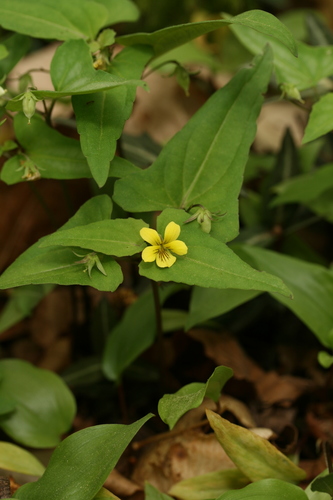
Halberd-leaved violet (Viola hastata) is in the Violet Family family (Violaceae). Across the U.S., iNaturalist users have logged 1,781 research-grade flowering observations of it in our sample, peaking in April.
Nationally it blooms mainly from March to April, but timing varies a lot by state and elevation — see the table below.
When to photograph Halberd-leaved violet: observations by month (U.S.)
About Halberd-leaved violet
Viola hastata, commonly known as the halberd-leaved yellow violet, is a perennial plant in the violet family found in the eastern United States. It blooms from March to May with yellow flowers.From Wikipedia via iNaturalist — article, CC BY-SA.
Halberd-leaved violet by state
| State | Observations | Peak month | Main season |
|---|---|---|---|
| North Carolina | 661 | April | Mar–Apr |
| Tennessee | 288 | March | Mar–Apr |
| Georgia | 158 | March | Mar–Apr |
| South Carolina | 140 | March | Mar–Mar |
| Kentucky | 138 | April | Mar–Apr |
| Pennsylvania | 111 | April | Apr–May |
| Virginia | 94 | April | Apr–Apr |
| West Virginia | 84 | April | Apr–May |
| Ohio | 49 | April | Apr–Apr |
| Alabama | 28 | March | Mar–Apr |
| Maryland | 25 | April | Apr–May |
| Florida | 5 | February | Feb–Feb |
Main season = months with at least 30% of the state's peak-month count.
Related wildflowers (Violet Family)
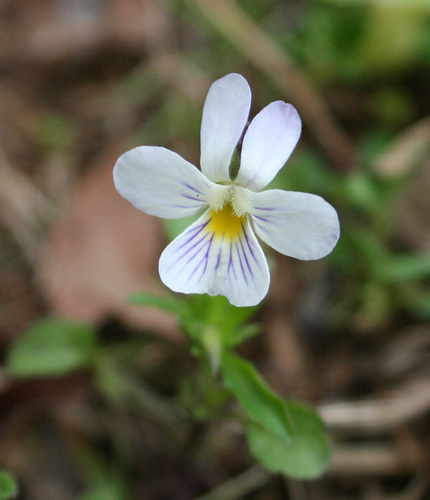
American field pansy

Canada Violet
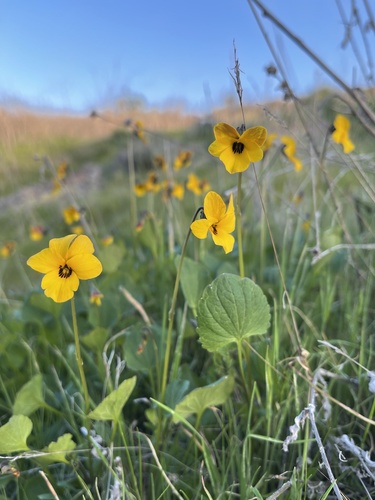
California Golden Violet
Smooth Yellow Violet
Bird's Foot Violet
European field pansy
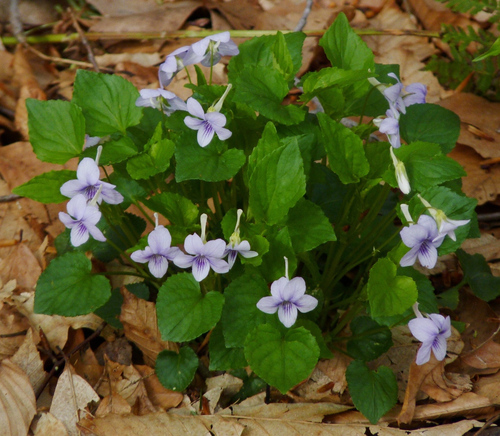
Long-spurred violet

Stream Violet
Photography tips
- Photograph flowers on calm, overcast mornings to avoid wind blur and harsh shadows.
- Get low: a shallow depth of field (f/2.8–f/5.6) isolates a bloom against soft color.
- Stay on trails — trampling meadows kills plants and ruins next year's display.
- Try a kaleidoscope abstract of a single bloom with our online kaleidoscope tool.
FAQ
When is the best time to photograph Halberd-leaved violet?
Nationally, April has the most observations, with the main season from March to April.
Where is Halberd-leaved violet most often seen?
The most observations come from North Carolina, Tennessee, Georgia.