
Located in Lake and Peninsula Borough, Alaska, Wolverine Falls is a waterfall at about 152 m (499 ft) above sea level. It lies in or next to Katmai National Park & Preserve, so park hours, fees and rules apply. It sits roughly 160 km (99 mi) WNW of Kodiak.
Wikidata describes it as: “waterfall on a tributary of Savonoski River on Alaska Peninsula in Alaska”.
Sunrise & sunset directions
At Wolverine Falls the sunrise point swings a long way through the year: about 38° (NE) at the June solstice and 138° (SE) in late December. Sunset moves from 322° (NW) in June to 223° (SW) in December, and the midday sun climbs to 55° in summer but only 8° in winter.
| Date | Sunrise | Azimuth | Sunset | Azimuth | Noon sun | Daylight |
|---|---|---|---|---|---|---|
| March equinox (Mar 20) | 8:21 AM | 89° E | 8:33 PM | 272° W | 31° | 12h 12m |
| June solstice (Jun 21) | 5:11 AM | 38° NE | 11:32 PM | 322° NW | 55° | 18h 21m |
| September equinox (Sep 22) | 8:05 AM | 88° E | 8:20 PM | 272° W | 32° | 12h 16m |
| December solstice (Dec 21) | 10:09 AM | 138° SE | 4:27 PM | 223° SW | 8° | 6h 18m |
Azimuth is measured clockwise from true north (90° = east, 270° = west). Computed for 2026; values change by less than a degree from year to year.
Golden hour & blue hour by month
Waterfalls photograph best in soft, even light: overcast days, deep shade, or the hour after sunrise before direct sun hits the water. Bright sun on white water blows highlights and adds harsh contrast.
| Month (15th) | Blue hour starts | Sunrise | Golden hour ends | Golden hour starts | Sunset | Blue hour ends | Daylight |
|---|---|---|---|---|---|---|---|
| January | 9:07 AM | 9:56 AM | 11:20 AM | 3:38 PM | 5:01 PM | 5:51 PM | 7h 05m |
| February | 8:11 AM | 8:53 AM | 9:53 AM | 5:15 PM | 6:15 PM | 6:57 PM | 9h 23m |
| March | 7:56 AM | 8:36 AM | 9:29 AM | 7:29 PM | 8:22 PM | 9:01 PM | 11h 46m |
| April | 6:23 AM | 7:07 AM | 8:01 AM | 8:38 PM | 9:32 PM | 10:16 PM | 14h 26m |
| May | 4:54 AM | 5:51 AM | 6:54 AM | 9:38 PM | 10:41 PM | 11:39 PM | 16h 49m |
| June | 3:51 AM | 5:11 AM | 6:24 AM | 10:17 PM | 11:30 PM | 12:50 AM | 18h 19m |
| July | 4:29 AM | 5:36 AM | 6:44 AM | 10:07 PM | 11:15 PM | 12:22 AM | 17h 39m |
| August | 5:53 AM | 6:41 AM | 7:38 AM | 9:10 PM | 10:08 PM | 10:56 PM | 15h 26m |
| September | 7:09 AM | 7:49 AM | 8:42 AM | 7:48 PM | 8:41 PM | 9:21 PM | 12h 51m |
| October | 8:16 AM | 8:56 AM | 9:52 AM | 6:18 PM | 7:15 PM | 7:55 PM | 10h 19m |
| November | 8:23 AM | 9:10 AM | 10:22 AM | 3:47 PM | 4:59 PM | 5:46 PM | 7h 50m |
| December | 9:11 AM | 10:04 AM | 11:44 AM | 2:46 PM | 4:26 PM | 5:19 PM | 6h 22m |
Local time (America/Anchorage), including daylight saving time. Golden hour runs from about −4° to +6° solar altitude, so the morning golden hour begins during blue hour, before sunrise.
Milky Way & night sky
The Milky Way's bright core (in Sagittarius) barely clears the southern horizon at this latitude, so focus on winter Milky Way, aurora or star trails instead.
| Month | Core visible (15th) | Hours | Max altitude | Direction |
|---|---|---|---|---|
| January | Below 10° in darkness | — | -11° | — |
| February | Below 10° in darkness | — | -4° | — |
| March | Below 10° in darkness | — | -2° | — |
| April | Below 10° in darkness | — | -3° | — |
| May | Below 10° in darkness | — | 0° | — |
| June | No darkness | — | — | — |
| July | No darkness | — | — | — |
| August | Below 10° in darkness | — | 0° | — |
| September | Below 10° in darkness | — | -4° | — |
| October | Below 10° in darkness | — | -5° | — |
| November | Below 10° in darkness | — | -10° | — |
| December | Below 10° in darkness | — | -21° | — |
Window when the galactic core is at least 10° high during astronomical darkness on the 15th of each month. Pick nights within a few days of the new moon. Plan exact nights with the Milky Way planner.
Estimated sky darkness: 1 Bortle 1 — Excellent dark-sky site. The Milky Way casts faint shadows; zodiacal light and airglow are obvious. Modeled zenith brightness ≈ 21.95 mag/arcsec². Aurora needs roughly Kp 2.0+ to show low on the northern horizon here.
Weather & best season
Long-term NASA satellite data for this area show March as the clearest month (about 65% average cloud cover) and July as the cloudiest (82%). July is the warmest month and January the coldest, which matters for gear, snow access and how long batteries last at night.
Average cloud cover (%)
| Jan | Feb | Mar | Apr | May | Jun | Jul | Aug | Sep | Oct | Nov | Dec | |
|---|---|---|---|---|---|---|---|---|---|---|---|---|
| High °F | 39 | 38 | 40 | 57 | 69 | 73 | 78 | 76 | 66 | 52 | 46 | 41 |
| Low °F | -23 | -18 | -16 | -2 | 13 | 36 | 40 | 37 | 27 | 2 | -18 | -19 |
| Precip. (in) | 5.3 | 5.0 | 3.2 | 3.9 | 3.9 | 3.7 | 3.9 | 4.7 | 5.9 | 5.7 | 5.0 | 6.1 |
Monthly climatology for the surrounding 1° grid cell from NASA POWER (MERRA-2). Mountain sites can be colder and cloudier than the cell average.
Photography tips for this waterfall
- Look for a foreground: a mossy boulder, a fallen log or the creek's leading lines make a stronger frame than the falls alone.
- Keep a microfiber cloth handy — spray drifts onto the lens, especially at the plunge pool.
- Bracket shutter speeds: 1/8 s, 1/2 s and 2 s give very different water textures and you can choose later.
- A 3-stop ND filter lets you use slow shutter speeds even when the light is bright.
- Shoot a vertical and a horizontal frame; tall falls often work better in portrait orientation.
- Shoot RAW to keep the most latitude for high-contrast sunrise and sunset scenes.
Season: Peak flow is usually in late spring; autumn adds color around the falls, and winter can bring ice formations at colder locations.
Suggested gear: Tripod, Circular polarizer, 3–6 stop ND filter, Lens cloth, Waterproof footwear. Work out exposures with the depth of field, ND filter and NPF rule calculators.
Permits, drones & access
National Park Service rules. Under federal law (54 U.S.C. 100905), still photography in National Park Service areas needs a permit only when it (1) takes place where members of the public are not allowed, (2) uses models, sets or props that are not part of the location's natural or cultural resources or administrative facilities, or (3) would cause the park to incur additional administrative costs to monitor the activity. Ordinary visitor and most landscape photography needs no permit. Commercial filming rules are separate and have changed in recent years — confirm current requirements with the park before a paid shoot.
Drones: Launching, landing or operating unmanned aircraft (drones) is prohibited in National Park Service units under a 2014 Superintendent's closure (36 CFR 1.5), except where a park has issued specific written approval. Flying from outside the boundary over park land can also violate park rules and disturb wildlife.
Nearby photo spots
Other locations within 25 km of Wolverine Falls, closest first.
 Mountain PeakMountain Peak
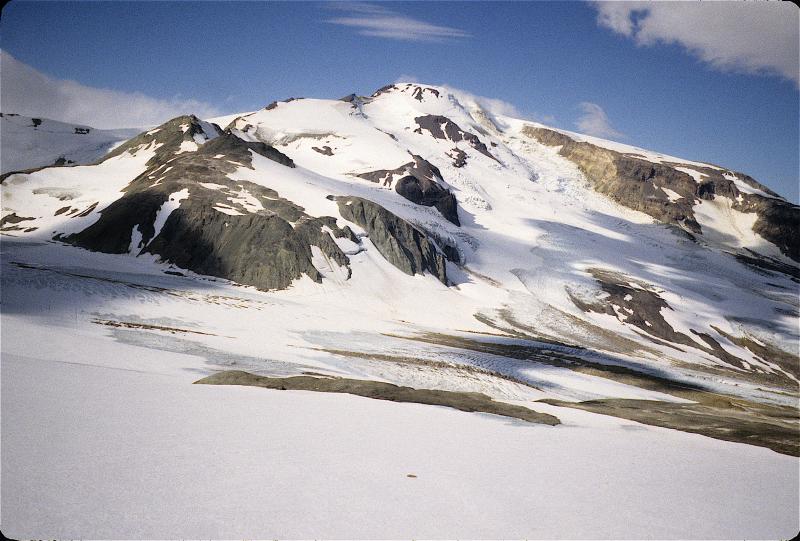 Mountain Peak
 Mountain Peak
FAQ
When is the best time to photograph Wolverine Falls?
What time is golden hour at Wolverine Falls?
Where does the sun rise and set at Wolverine Falls?
Can you see the Milky Way from Wolverine Falls?
Do you need a permit to photograph at Wolverine Falls?
How far is Wolverine Falls from Kodiak?
Sources
Location data: Wikidata, OpenStreetMap contributors, USGS GNIS / GeoNames. Sun, moon and Milky Way times are computed by LWPhoto Atlas for 2026. Climate: NASA POWER. Sky darkness is a population-based estimate (Walker's law), not a measurement. See data sources & licenses.