Top scenic viewpoints
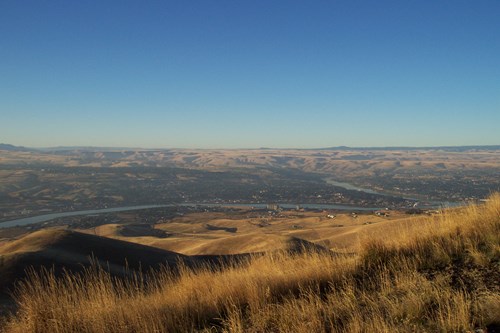 Scenic Viewpoint
Confluence Overlook
 Scenic Viewpoint
Castle Rocks Geological Area Overlook
Scenic ViewpointBernard Overlook
Scenic ViewpointCabinet Dam Viewpoint
Scenic ViewpointCarey Dome Scenic View
Scenic ViewpointGalena Overlook
Scenic ViewpointGrandview Overlook
Scenic ViewpointHughes Ridge Viewpoint
Scenic ViewpointLloyds Lake Overlook
Scenic ViewpointLookout Point
Scenic ViewpointOsprey Nests Viewpoint
Scenic ViewpointOverlook Mill
Scenic Viewpoints by county
All scenic viewpoints (20)
| Name | County | Elevation | Nearest town | Sky |
|---|---|---|---|---|
| Confluence OverlookNez Perce | Nez Perce County | — | Lewiston | 5 |
| Castle Rocks Geological Area OverlookCity Of Rocks | Cassia County | — | Burley | 2 |
| Bernard Overlook | Bonner County | 1,032 m | Spirit Lake | 2 |
| Cabinet Dam Viewpoint | Bonner County | 672 m | Sandpoint | 2 |
| Carey Dome Scenic View | Idaho County | 2,344 m | McCall | 1 |
| Galena Overlook | Blaine County | 2,546 m | Sun Valley | 1 |
| Grandview Overlook | Fremont County | 1,804 m | Ashton | 1 |
| Hughes Ridge Viewpoint | Boundary County | 1,298 m | Bonners Ferry | 1 |
| Lloyds Lake Overlook | Idaho County | 2,188 m | McCall | 1 |
| Lookout Point | Owyhee County | 1,456 m | Mountain Home | 1 |
| Osprey Nests Viewpoint | Bonner County | 630 m | Sandpoint | 4 |
| Overlook Mill | Elmore County | 2,067 m | Hailey | 2 |
| Park Creek Overlook | Custer County | 1,992 m | Hailey | 1 |
| Payette Lake Overlook | Valley County | 1,572 m | McCall | 3 |
| Sabe Vista Point | Idaho County | 2,268 m | Orchard Homes | 1 |
| Sheep Rock Overlook | Adams County | 2,089 m | Joseph | 1 |
| Thatcher Creek Overlook | Custer County | 2,008 m | Hailey | 1 |
| Upper Gospel Lake Viewpoint | Idaho County | 2,371 m | Grangeville | 1 |
| Vista Point Lookout | Idaho County | 2,516 m | Joseph | 1 |
| Arctic Point Fire Lookout | Idaho County | 2,291 m | Orchard Homes | 1 |
Sky = estimated Bortle class (1 darkest – 9 brightest).
Map
How to photograph scenic viewpoints
Overlooks are about the sweep of the land, so low-angle light matters most: side-light at sunrise or sunset reveals ridges and texture that midday sun flattens.
- Arrive 30–45 minutes before sunrise or sunset to find a composition before the light peaks.
- Use a telephoto (70–200 mm) to isolate layered ridges and light rays instead of shooting only wide.
- Check the sun azimuth for your date: front-light, side-light and back-light give three different pictures from the same rail.
- Haze builds in summer afternoons; mornings after a cold front are often the clearest.
- Stay behind barriers — many overlook edges are undercut or crumbly.
Season: Clear, dry air in autumn and after winter storms gives the longest views; summer adds wildflowers but also haze.